Custom wooden cremation urns: what you need to know
Choosing an urn rarely happens under good conditions. This page gathers the practical information: the capacity to plan for, the dimensions to verify, and what Quebec law provides.
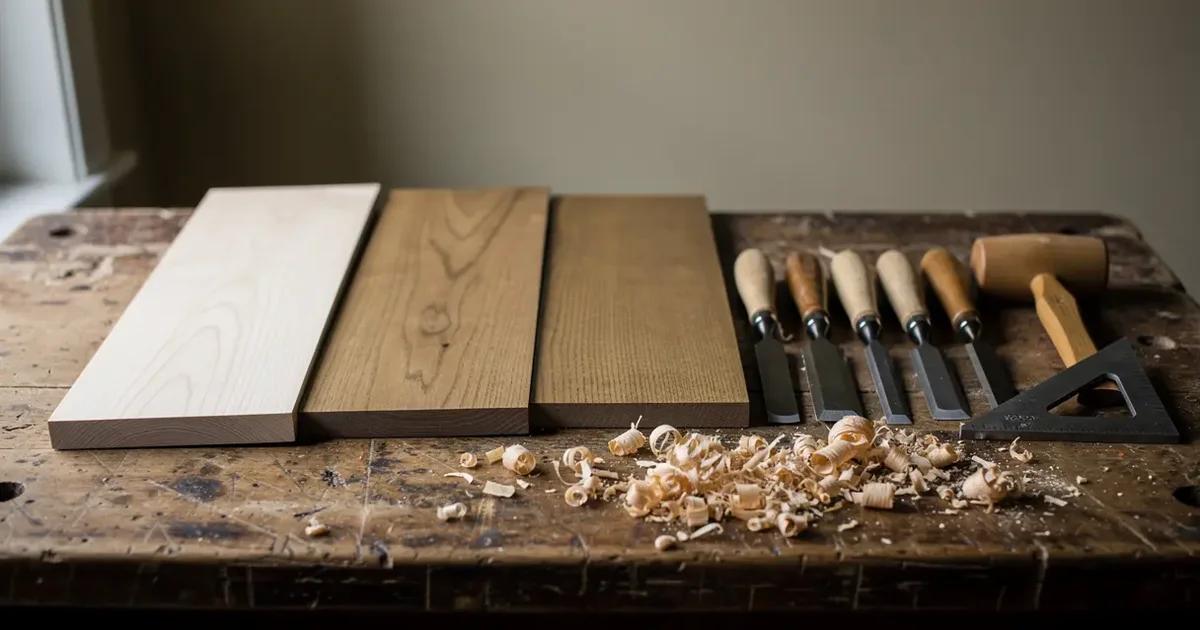
We build custom urns at the workshop. This page is not a catalogue and contains no pricing. It is the information families ask us for most often, gathered here so it is available without having to phone.
The capacity to plan for
This is the most concrete question, and the one that most often stalls a decision.
The rule used across the funeral industry is simple: allow roughly one cubic inch of interior capacity per pound of the person's weight before cremation. A 160 pound person therefore needs about 160 cubic inches.
- Standard adult urn: about 200 cubic inches, roughly 3.3 litres. This size suits the great majority of adults.
- Keepsake or sharing urn: 3 to 30 cubic inches, when a portion of the ashes is divided among several family members.
- Companion urn: about double the adult capacity, for two people.
- Pet urn: the same rule applies, one cubic inch per pound.
Above roughly 200 pounds, plan for more than the standard size. If in doubt, the funeral services provider can confirm the exact volume.
Niche dimensions, to verify first
If the urn is destined for a columbarium, the constraint is not interior capacity but exterior footprint. And that constraint comes from the cemetery, not from the law.
There is no province-wide standard dimension in Quebec. Each cemetery and each columbarium sets its own niche size. Single niches generally run around 9 to 12 inches wide and high, by 11 to 15 inches deep, but the spread between two establishments is real.
Ask the cemetery for the exact interior dimensions of the niche as well as the door opening, and pass them to us. That is precisely what a custom urn allows and a catalogue urn does not: fitting the niche rather than hoping it fits.
Wood species
A solid wood urn is chosen mostly for what the wood evokes. Technical considerations come second, with one exception: the urn has to close securely.
- Walnut. Deep brown, straight grain, restrained. The most frequently requested.
- Yellow birch, known in Quebec as merisier. A warm tone that darkens over the years.
- Oak. Strongly figured grain, considerable presence.
- Maple. Pale, even, discreet.
- Ash. Supple, legible grain, an underrated option.
We also work from wood you supply, when it carries particular meaning: a board kept for years, timber from a tree on the property. That requires checking the condition and dryness of the wood before committing, because insufficiently dry wood will move after the piece is built.
Our materials →Engraving
On a small surface, laser engraving reaches a level of fineness that hand carving does not.
- A name, dates, a short inscription.
- A motif: a tree, a map, a place, an instrument, a boat.
- A signature or scanned handwriting, engraved exactly as written.
- A longer text on the back face or under the base, kept discreet.
We produce a proof of the artwork before engraving and wait for your approval. The piece cannot be redone.
Pet urns
This is a frequent request and it deserves the same care. The capacity rule is identical: one cubic inch per pound.
For a 40 pound dog, allow about 40 cubic inches. For a cat, generally 8 to 15 cubic inches. These urns usually stay at home rather than in a columbarium, which leaves far more freedom on shape and dimensions. They are often engraved with a name and a silhouette.
What Quebec law provides
The Funeral Operations Act governs the disposition of ashes, not the manufacture of urns. No provincial rule imposes a material or a dimension. Wood is fully accepted.
- Ashes must be kept in a rigid, closed container. A wooden urn with a screwed base or a fitted lid meets that requirement.
- Ashes may be kept at home, with no time limit and no particular procedure.
- Burial of an urn in the ground may only take place in a cemetery.
- Scattering is permitted, provided it does not constitute a nuisance and respects the dignity of the deceased.
This summary is provided for information. For your situation, the references are the text of the Act and your funeral services provider.
Lead time
This is where we have to be straightforward. A custom urn takes time: drawing, approval, machining, finishing, and curing of the finish. It is not compatible with a few days' notice.
Many families temporarily keep the ashes in the container provided by the funeral services provider, then transfer them to the final urn once it is ready. Nothing requires deciding everything within the week.
If a specific date has to be met, tell us at the first exchange. We will say honestly whether it is feasible, and we would rather say so immediately than put you in front of a delay.
Contact us
If you would like a custom urn, write to us with the approximate capacity, the niche dimensions if they apply, and the species that speaks to you. We reply plainly, with no sales pressure and no follow-up campaign.
Frequently asked questions
What size of urn should I plan for?
About one cubic inch of interior capacity per pound of the person's weight before cremation. The standard adult urn is roughly 200 cubic inches, or 3.3 litres, which suits most adults up to about 200 pounds.
Is a wooden urn accepted in Quebec?
Yes. Quebec law imposes no material. It requires that ashes be kept in a rigid, closed container, which a well-built wooden urn satisfies.
Will the urn fit a columbarium niche?
Only if it is built to the right dimensions. There is no provincial standard: each cemetery sets its own niche size. Ask for the exact interior dimensions and the door opening, and we adjust the urn accordingly.
Can we use wood that has meaning for the family?
Yes, when the condition and dryness of the wood allow it. A board kept for years or timber from a tree on the property can be used. We check the wood before committing, because insufficiently dry wood will move after the piece is built.
How long does it take?
Several weeks, across drawing, approval, machining and finishing. Many families temporarily keep the ashes in the container provided by the funeral services provider and transfer them afterward. If you have a date to meet, tell us at the first exchange.