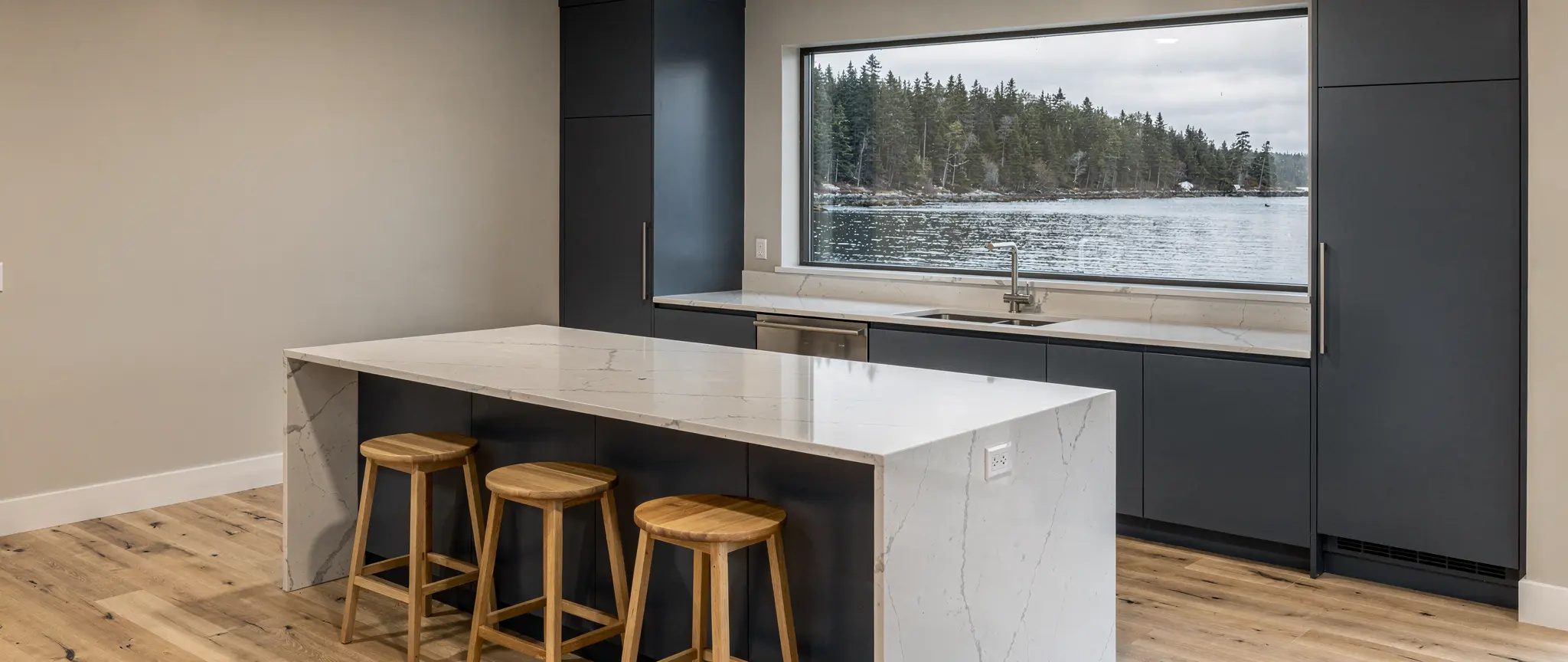
Quartz countertops for kitchens: cost, colours and downsides
Three questions come up before buying a quartz countertop for a kitchen: what sets the cost, which colour to choose, and what the downsides are. The sources are manufacturer and seller guides. In Baie-des-Chaleurs, Atelier Multidécor can arrange the countertop with the cabinets it builds; partner companies measure, cut and install the stone.
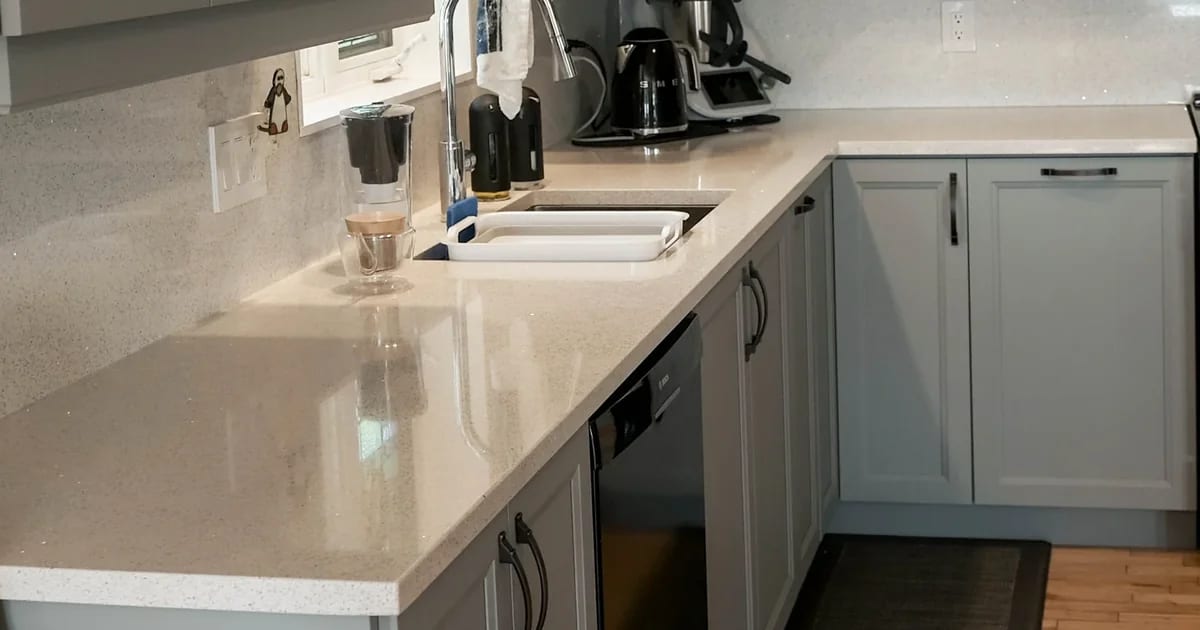
A quartz countertop is a manufactured slab, made of about 90% ground quartz bound with resin and pigments. You may also see it called engineered quartz or engineered stone.
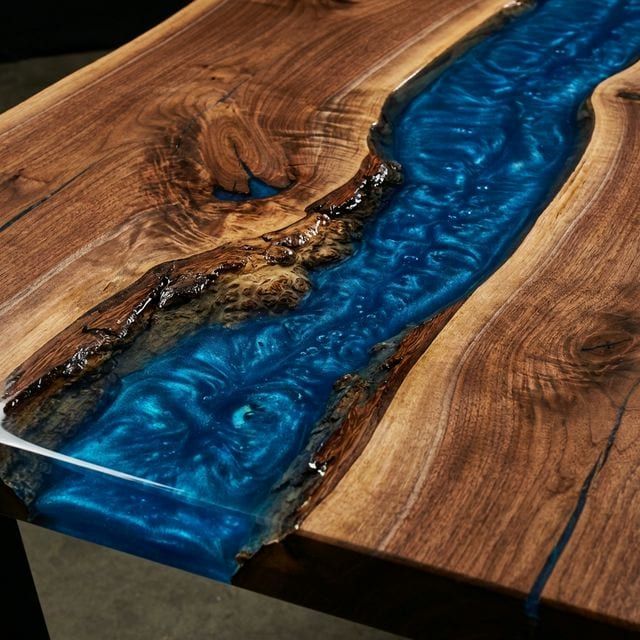
You may be weighing quartz against epoxy as well. Our article on epoxy countertop cost makes that comparison. With your cabinets, the atelier can also arrange a quartz or granite countertop. Partner companies take the measurements, cut the stone and install it.
What is a quartz countertop, and who is it for?
Manufacturers mix the quartz particles, resin and pigments, then compact the mixture under vacuum with vibration. The slabs are then cured and polished. Depending on the manufacturer, quartz makes up about 90% to 93% of the slab. The rest is resin and pigment. In daily use, that gives a surface with these traits:
- It is not porous. Manufacturers say it needs no sealer, and some advise against one.
- It is hard: one brand rates it 7 out of 10 on the Mohs scale.
- It cleans with soap and water, with no special product.
- It handles normal kitchen heat. A very hot pot set straight on it can mark it.
- It is made for indoor use. Outdoors, UV rays can fade it and weaken it over time.
That suits a kitchen where you want simple care and always keep a trivet within reach. It suits an outdoor kitchen less, or a kitchen where scorching pans go straight onto the counter.
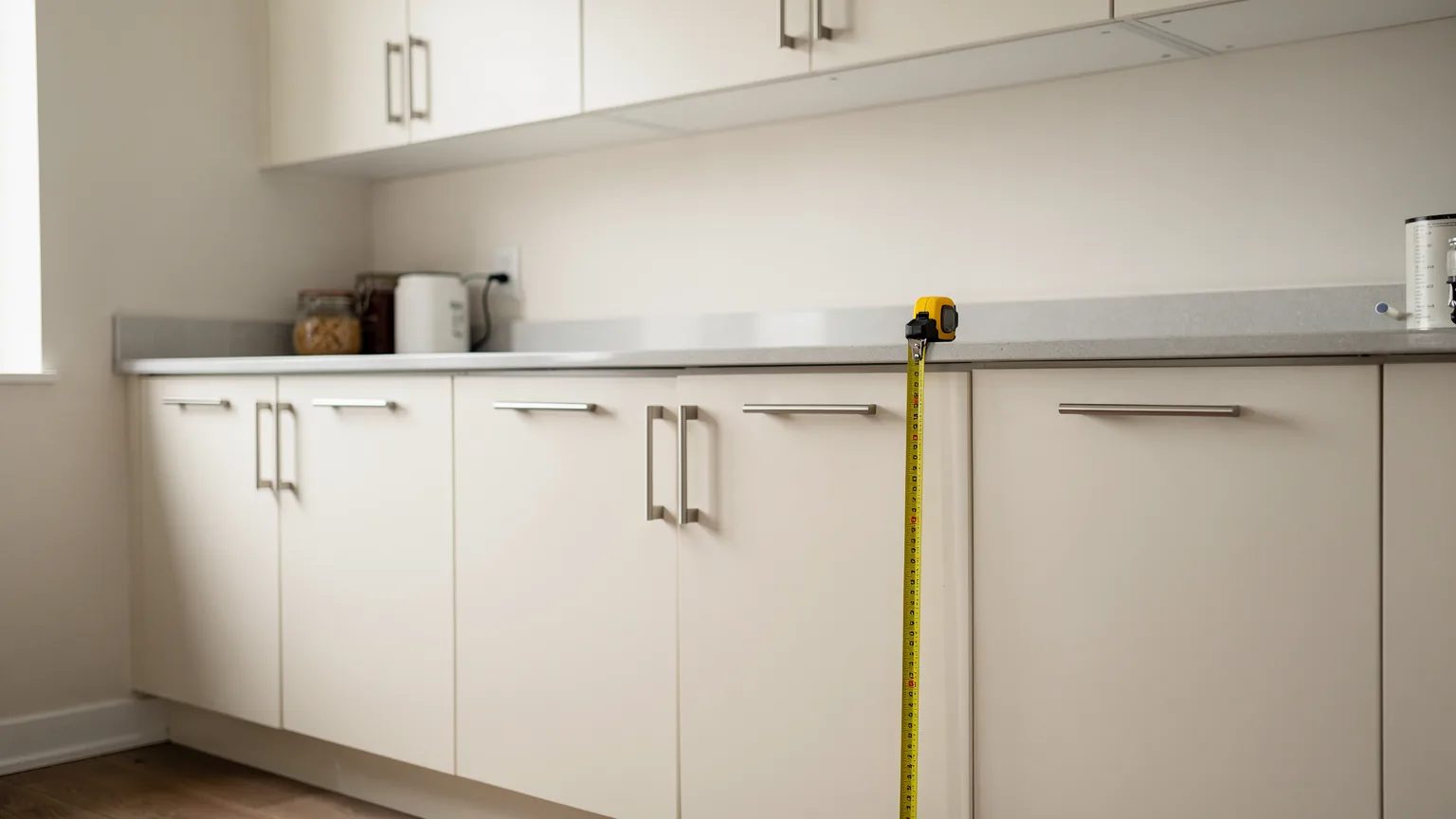
The countertop sits on the base cabinets, and some quartz manufacturers require structural support under the slab. The shop designs and builds those cabinets to order, at the height chosen with you. Ask the company that will cut and install your countertop what support to plan for. Our guide to kitchen counter height gives the benchmarks.
Quartz countertop cost: what makes the price vary
Quartz is most often priced per square foot. The price depends on the project, and Quebec and Canadian sellers name the same cost drivers:
- Area and project size: a small countertop costs more per square foot than a large kitchen.
- Brand and series: slab prices vary widely from one model to the next. Veining, large formats and a matte finish place a model in a price tier.
- Thickness: 3/4 in (2 cm) or 1 1/4 in (3 cm). The price gap between the two is not established, because published figures contradict each other, sometimes within one seller.
- Edge profile and backsplash: a shaped edge or a quartz backsplash adds to the base price.
- Cut-outs: each opening, for an undermount sink or a cooktop, is often charged separately.
- Seams: a countertop longer than one slab needs at least one seam, and that counts in the price.
- Supply only or installed: a "supply only" price leaves out the template, transport, cut-outs and installation.
To compare two quotes, check that they describe the same countertop: same thickness, same edge, same cut-outs, installation included or not.
Our page on custom kitchen cabinets describes the design of the cabinets that carry the countertop.
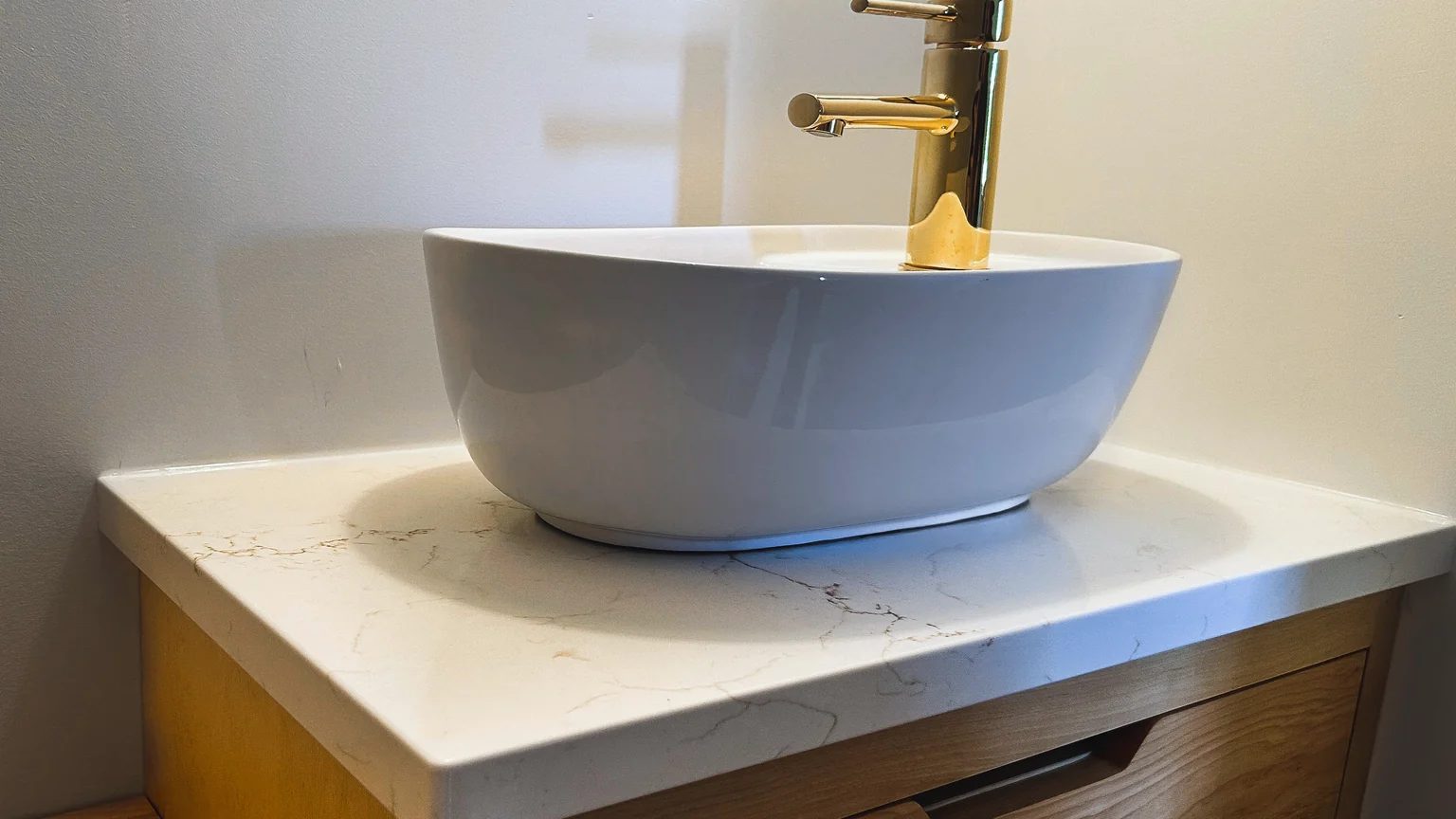
White, grey or black quartz countertops: which colour to choose?
Colour changes what shows with use and, at times, the price of the model.
- Plain or veined white: many quartz models imitate a natural stone and carry its name, such as Statuario or Taj Mahal.
- White and seams: according to one Quebec seller, a white seam can change colour over time, depending on care. That is not always the case.
- White and sunlight: one manufacturer calls fading rare indoors under normal conditions. Direct, prolonged sun can still shift a pale shade over the years.
- Grey and black: on a dark surface, wear marks and stains show more. On a plain design with no pattern, marks left by objects also stand out more.
- Caring for a dark countertop: avoid cream cleaners. Protégez-Vous, the Quebec consumer magazine, notes that they often contain a bleaching agent, which can alter the colour.
The colours available on the market vary from one brand and series to the next. Before you choose, ask to see the slab itself.
What are the downsides of a quartz countertop?
Quartz has real limits. Manufacturers state them themselves, in their care guides and in their warranties.
- Heat: a very hot pot can leave a mark, because heat can melt the resin that binds the quartz. Published limits differ from brand to brand, so always use a trivet.
- Thermal shock: a sudden temperature change can damage the surface, especially near the edges.
- Chips: no stone is chip-proof, one manufacturer writes. An object that hits an edge, mostly near the sink or the dishwasher, can chip it.
- Repair: according to a Quebec countertop fabricator, a quartz countertop cannot be repolished. A repair is a job for a stone professional.
- Scratches: quartz resists scratches. Cut on a board, never on the countertop.
- Seams: a countertop longer than one slab needs at least one seam. Pattern and shade can differ on either side of a seam.
- Outdoors: most manufacturers sell indoor surfaces only, and their warranties often exclude outdoor installation.
Several quartz manufacturers offer a warranty on the slab. These warranties generally exclude heat, impact, chemicals and outdoor use. They often ask for registration, and sometimes for a fabricator approved by the brand. Ask the company that will cut and install your countertop what its own warranty covers on cutting and installation.
Another question comes up often: silica. The risk comes from the dust made when stone is cut, drilled or ground, quartz and granite alike. It affects shop and installation workers. In Quebec, the CNESST, the provincial workplace health and safety board, sets an exposure limit for these workers. Australia has banned the fabrication and installation of engineered stone (countertop quartz) since July 1, 2024. Safe Work SA, South Australia's workplace safety regulator, confirms this and adds that countertops already installed do not have to be removed.
How do you clean and care for a quartz countertop?
Quartz care comes down to a few habits. Brands agree on the basics and differ on a few products.
- Every day: a damp cloth, warm water and mild soap, then a dry cloth. Wipe up spills right away, especially on a dark countertop.
- Vinegar: Protégez-Vous suggests half water, half vinegar, and one manufacturer proposes the same mix.
- Avoid: scouring pads, abrasive powders, oven cleaner, drain cleaner and paint strippers.
- Bleach: brands contradict each other on it. Follow the care guide for your countertop's brand.
- No sealer and no natural-stone products: several manufacturers advise against them on quartz.
Granite, a natural stone, follows other rules. Our guide to caring for and sealing granite covers them.
Quartz or quartzite: what is the difference?
The two names sound alike and are often mixed up. Countertop quartz is a manufactured product, bound with resin. Quartzite is a natural stone, formed from sandstone under heat and pressure.
Model names add to the confusion. Some quartz lines carry the name of a natural stone, and a label reading "soft quartzite" can actually mean a marble. Ask the seller whether the slab is manufactured quartz or quartzite.
| Criterion | Countertop quartz | Quartzite |
|---|---|---|
| What it is | Manufactured product: about 90% quartz, with resin and pigments | Natural stone formed from sandstone |
| Sealer | None, and several manufacturers advise against it | Most often needed, according to sellers |
| Heat | Always use a trivet: strong heat can mark the resin | Handles heat better, according to sellers |
| Sun and outdoors | Made for indoors: UV can fade it | Handles UV better, according to sellers |
| Model name | May carry the name of a natural stone | A label can refer to another stone, such as a marble |
General comparison drawn from manufacturer and seller guides. Check the data sheet for the model you pick.
Every manufacturer publishes a care guide. The Caesarstone guide, which is in French, is one example: follow the guide for your countertop's brand.
Your cabinets, with a quartz or granite countertop
A stone countertop rests on the base cabinets. Atelier Multidécor has designed and built custom kitchen cabinets in Saint-Siméon-de-Bonaventure, in the Gaspé, since 1994. With your cabinets, the atelier can also arrange a quartz or granite countertop. Partner companies take the measurements, cut the stone and install it. Send us your kitchen measurements to talk about your cabinets and countertop.
Frequently asked questions
Does quartz stain?
Quartz resists stains well because it is not porous. One manufacturer notes that it can still stain if it is poorly maintained. Wipe up spills right away, especially on a dark countertop, where stains show more.
How do you clean a quartz countertop?
A damp cloth, warm water and mild soap are enough day to day, followed by a dry cloth. Avoid scouring pads, abrasive powders and harsh cleaners such as oven cleaner. On bleach, brands contradict each other, so follow the care guide for your countertop's brand.
How do you protect a quartz countertop?
Always set hot pots on a trivet, and cut on a board. Watch for knocks on the edges, mostly near the sink and the dishwasher. Keep indoor quartz out of prolonged direct sun, and do not install it outdoors.
How do you make a quartz countertop shine?
The slabs are polished at the factory. One manufacturer says quartz needs no sealer, no polish and no refinishing. Clean it with soap and water and dry it with a soft cloth. A Quebec countertop fabricator notes that a quartz countertop cannot be repolished.
What is the difference between quartz and granite?
Countertop quartz is manufactured: about 90% quartz bound with resin and pigments. Granite is a natural stone. Quartz needs no sealer. One Quebec seller finds that granite handles heat better. In both cases, the price depends on the model.