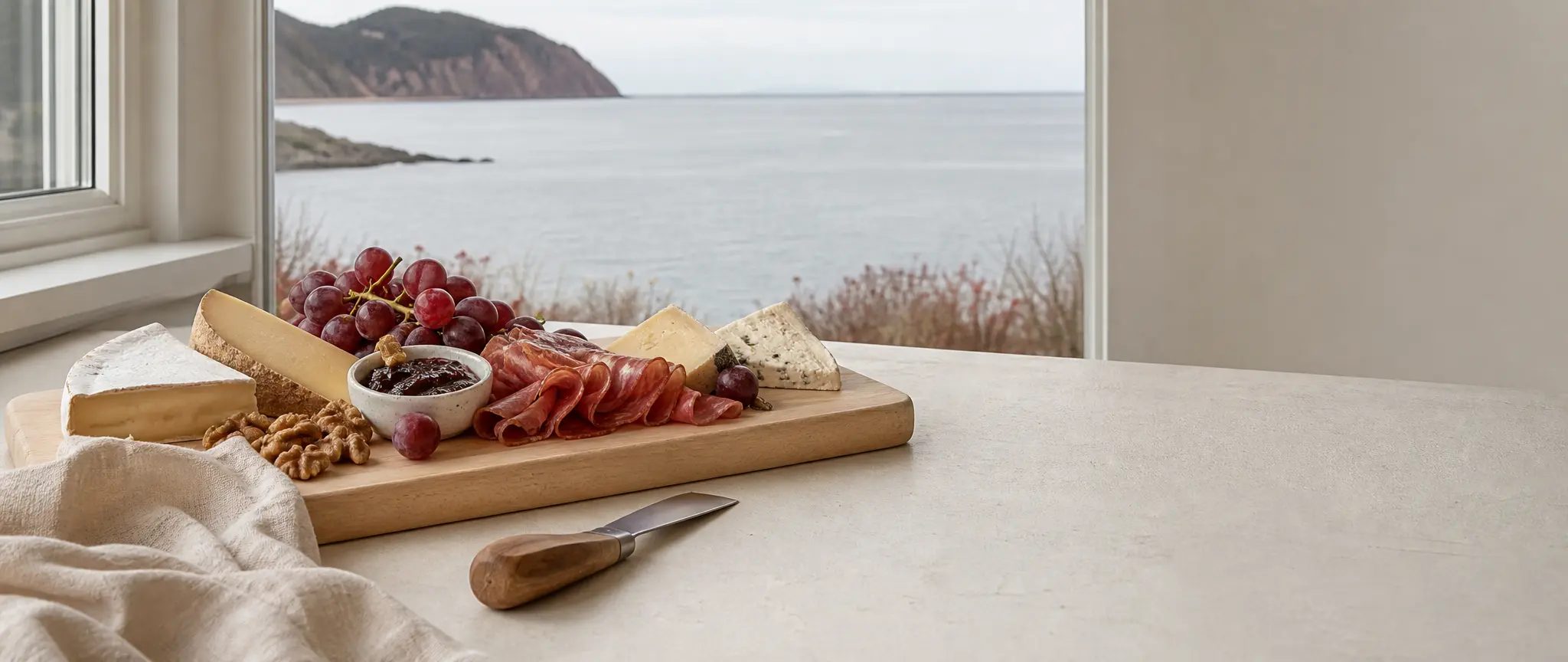
Wooden charcuterie board: how to choose the wood, the size and the engraving
A wooden charcuterie or cheese board comes down to the wood, the size and the finish. Here is how to decide, what engraving adds, what resin can and cannot do, and how to look after the board.
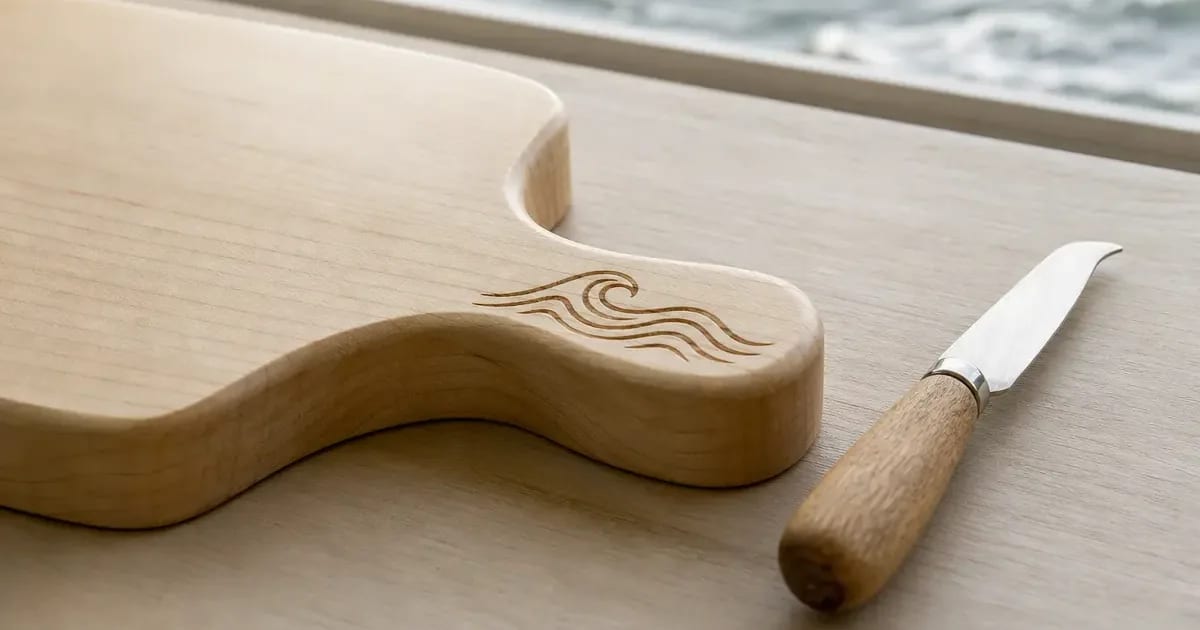
For a wooden charcuterie or cheese board as a gift, pick a hard, tight-grained wood (maple, walnut or cherry), a size that suits the number of guests and an engraving placed where it stays out of the way of serving. A coat of food-grade oil now and then keeps it looking good.
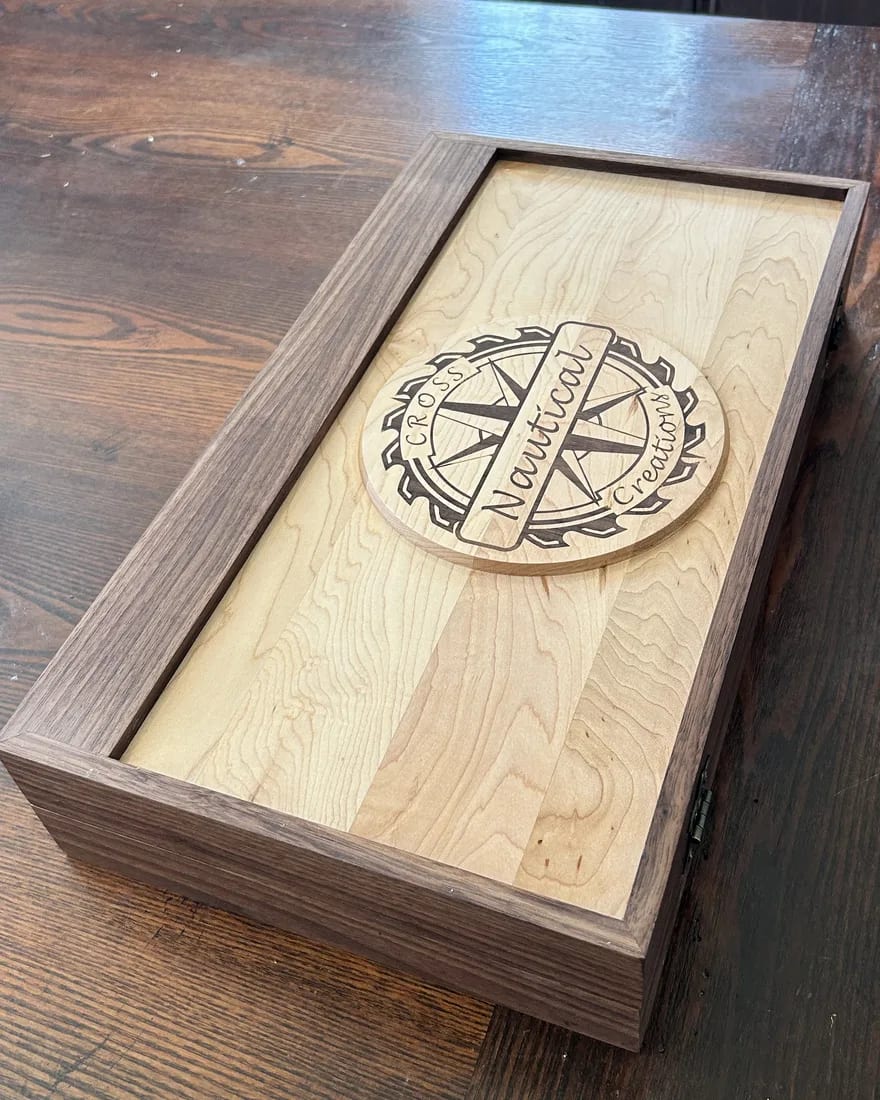
Atelier Multidécor, in Saint-Siméon-de-Bonaventure, can make a serving board to order, in wood and laser-engraved. A resin inlay stays decorative and never goes on the surface where food is placed. Whether it can be made, and when, is confirmed on the first call.
Which wood should you choose for a cheese or charcuterie board?
A serving board meets food and knives. Four criteria help you pick the species:
- Tight grain: fewer pores where liquids can settle.
- Hardness: a hard wood stands up better to knife marks.
- Species: avoid resinous softwoods such as pine and spruce for the table.
- Finish: no varnish or stain on the serving surface.
The workshop can make the board in any species in the table, as one of its custom projects. The species available is confirmed on the first call.
| Species | Colour | Hardness | Good to know |
|---|---|---|---|
| Maple | Cream to pale beige | Hard | Tight grain, shows off the colours of cured meats |
| Walnut | Dark brown | Medium-hard | Contrasts with pale cheeses |
| Cherry | Reddish brown, darkens with time | Medium-hard | Warm tone that changes in the light |
General guidance. The species available, and whether it can be done, is confirmed on the first call.
What size of board for how many guests?
The sizes below are common starting points. A custom board is sized to your table, your tray or your kitchen. Thickness usually runs from 3/4 to 1 1/4 in (2 to 3 cm).
- Small, about 10 x 6 in (25 x 15 cm): a snack for two.
- Medium, about 16 x 10 in (40 x 25 cm): four to six guests.
- Large, about 24 x 12 in (60 x 30 cm): a table of eight or more.
The workshop's laser takes pieces up to 36 x 18 in (915 x 458 mm). Our guide to engraving materials and objects shows what each wood looks like once engraved.
Edge grain or end grain: which one?
These two terms describe how the wood is cut and assembled. They change the look of the board, how it behaves under a knife and how much workshop time it takes.
- Edge grain: strips set on edge and glued side by side, with long, straight lines. The surface is flat, simple to care for and very common for serving.
- End grain: small blocks stood upright in a checkerboard. The knife slips between the fibres instead of cutting across them, which is generally gentler on the edge. The checkerboard takes more assembly.
For a cheese or charcuterie board that is mostly for serving, edge grain is enough. End grain makes sense if you cut on the board often.
What engraving suits a cheese or charcuterie board?
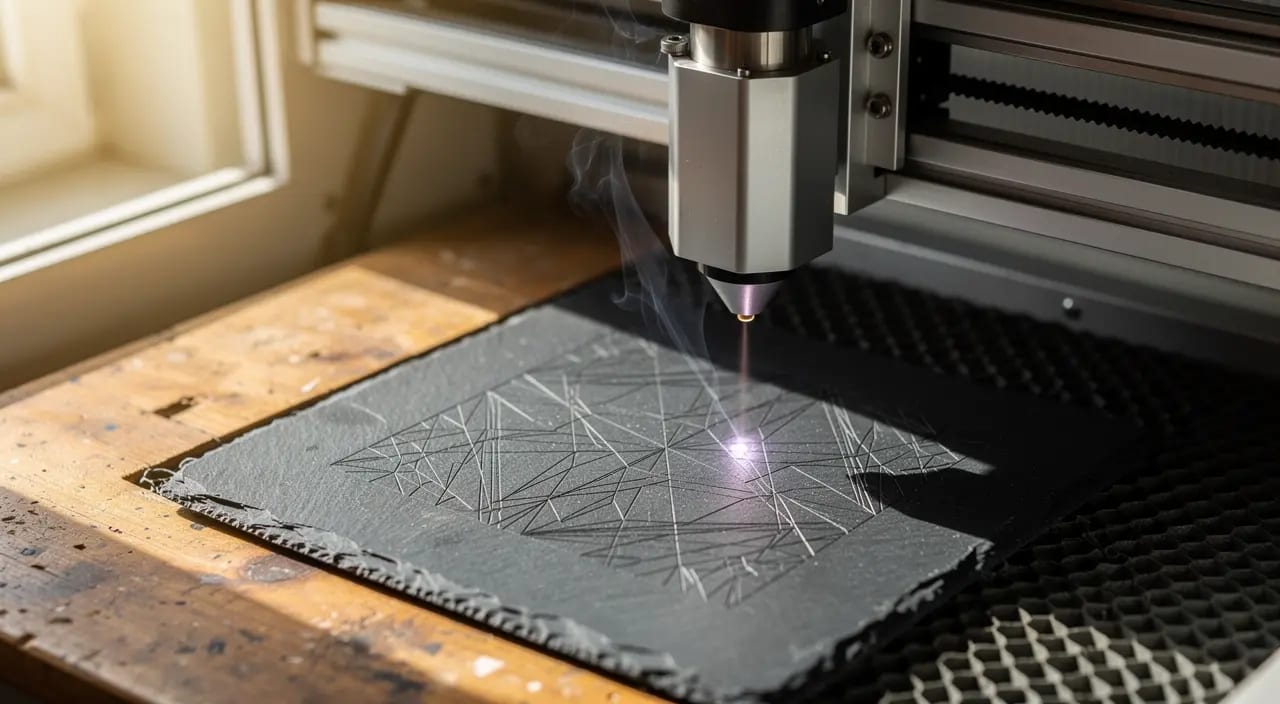
Laser engraving personalizes the board: a family name, a wedding date, a phrase, a small motif or the outline of a bay. Three positions come up most:
- On the handle or the edge: the serving surface stays smooth.
- On the back: a quiet message you find when you turn the board over.
- In the centre: possible for a board that is mostly decorative. An engraved surface is less smooth than a sanded one, and it needs careful cleaning.
Send the exact text in writing. We proofread every name and date before the machine starts, because an engraving cannot be erased.
Can you add resin to a serving board?
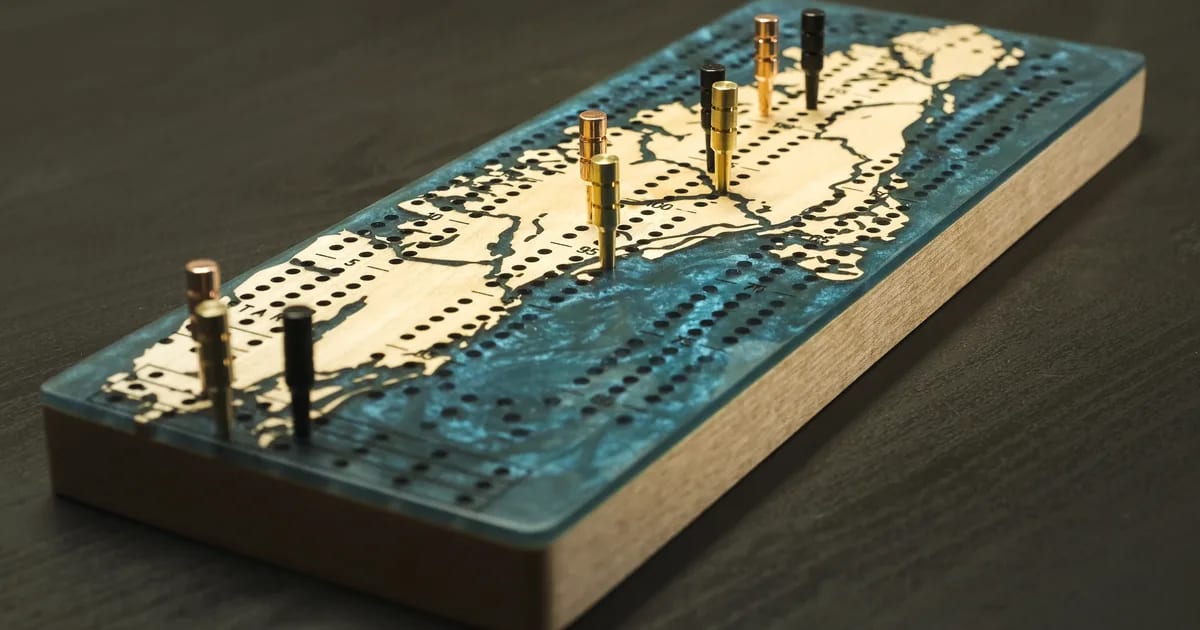
Epoxy resin makes handsome pieces, like the workshop's game boards. On a serving board it stays decorative only. As of November 2026, we do not present any resin as food-safe.
- Place the inlay on the handle or the edge, away from the area where food is set down and cut.
- Keep the serving surface in bare wood.
- A piece made entirely of resin is meant for display, not for the table.
If you want a sea or river effect, raise it on the first call: we will tell you what can be done without touching the serving area.
How do you look after a wooden board, and how do you order one?
A few simple habits keep the wood in good shape:
- Wash it by hand with warm water and mild soap, then wipe it dry.
- Keep it out of the dishwasher and out of the sink to soak.
- Dry it standing on edge, so air reaches both faces.
- Oil it now and then with food-grade mineral oil when the wood looks dry.
To order, describe the board to the workshop: species, size, text to engrave. Each request is reviewed before it is accepted. Pick the piece up in Saint-Siméon-de-Bonaventure or have it delivered within the Baie-des-Chaleurs. Elsewhere in the Gaspé, delivery is discussed on request, case by case.
More pieces to give are in our post on wooden Christmas gift ideas.
Common species and the difference between edge grain and end grain are described in the Cutting board article on Wikipedia.
A board to give, made for you?
Tell us the wood, the size and the text to engrave. In business since 1994, the workshop tells you plainly what can be made, and when. Phone: 418-534-4167.
Frequently asked questions
Which wood should I choose for a cheese board?
Maple, walnut and cherry are common choices: hard or medium-hard, tight-grained and easy to clean. Maple is the hardest of the three, while walnut and cherry bring more colour. The species available is confirmed on the first call.
What is the difference between a charcuterie board and a cutting board?
A charcuterie board is a serving board: it presents the food. A cutting board takes the blade every day. You can slice lightly on a serving board, but regular knife work calls for a thicker, sturdier board.
Can resin be added to a charcuterie board?
Only as decoration, on the handle or the edge, away from the serving area. As of November 2026, we do not present any resin as food-safe. The surface where food is placed stays in bare wood.
Can you engrave a name on a cheese board?
Yes. The laser engraves hardwood. To keep the serving surface smooth, you can engrave the handle, the edge or the back. Send the exact text in writing: we proofread it before engraving.
Can a wooden board go in the dishwasher?
No. Wash it by hand with warm water and mild soap, then dry it standing on edge. Oil it now and then with food-grade mineral oil. A dishwasher swells wood and can split it.