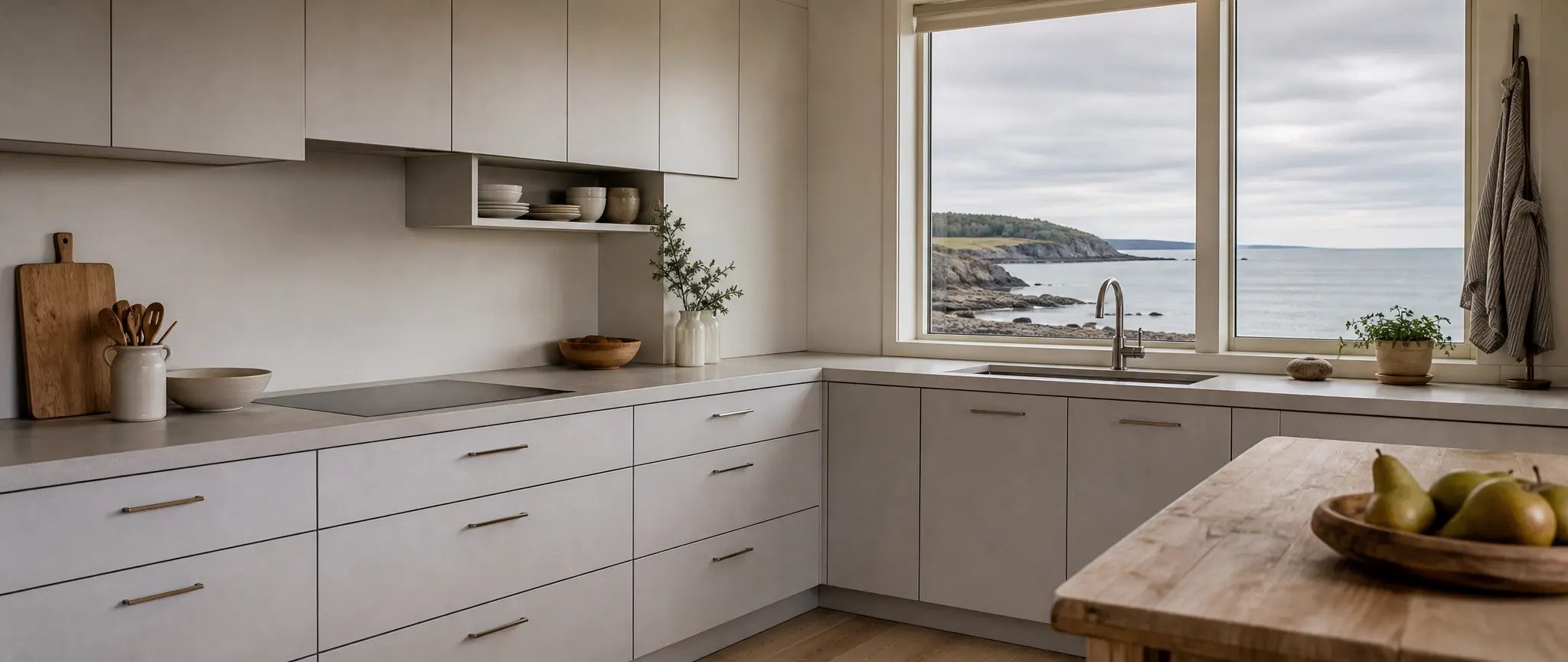
Custom cottage kitchen: built for humidity and frost on the Gaspé coast
A cottage sits cold and damp for part of the year, then warms up all at once in spring. Here is how a custom melamine kitchen prepares for that: panels, edges, hardware and a plan for a small room.
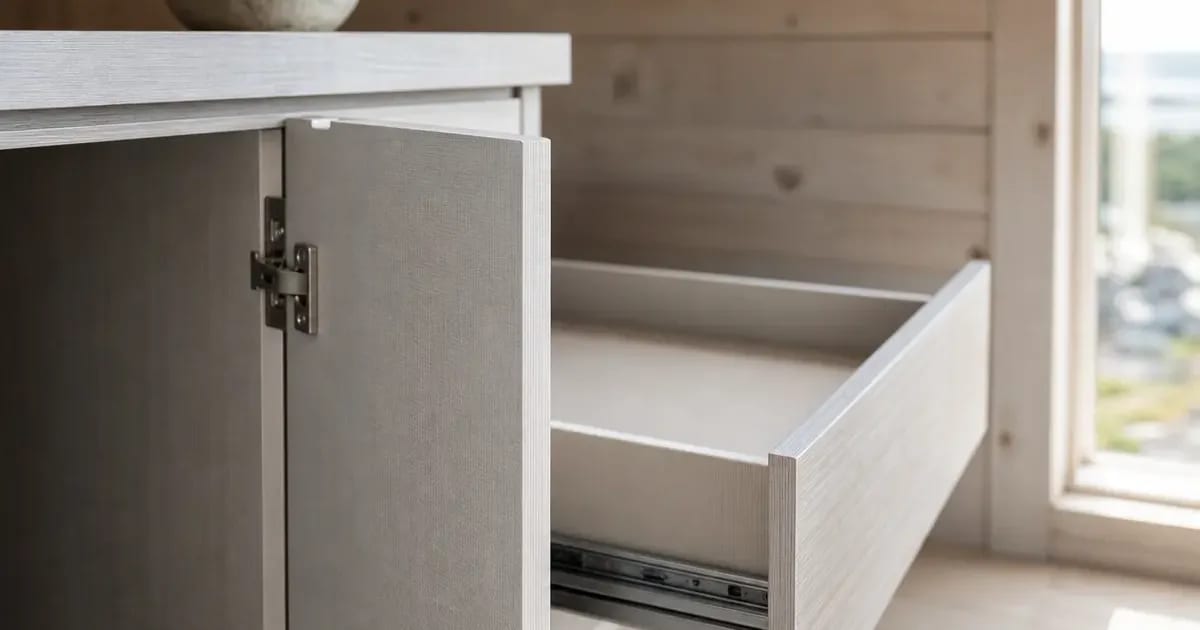
A cottage kitchen is chosen first for what it has to put up with: humidity, swings in temperature and a winter without steady heat. Melamine cabinets with well-sealed edges and good hardware suit that use well.
Built to measure, the kitchen also puts every inch of a small room to work. This post explains what matters for a cottage or seasonal home in the Gaspé, and what the workshop can make to order once feasibility is confirmed on the first call.
What sets a cottage kitchen apart from a house kitchen?
Three things, all tied to climate and use. First, a cottage is often closed for weeks, sometimes all winter, with no steady heat. Second, the coastal air is damp, and salty near the sea. Third, the room is small and serves many people in few days: a family, guests, big meals.
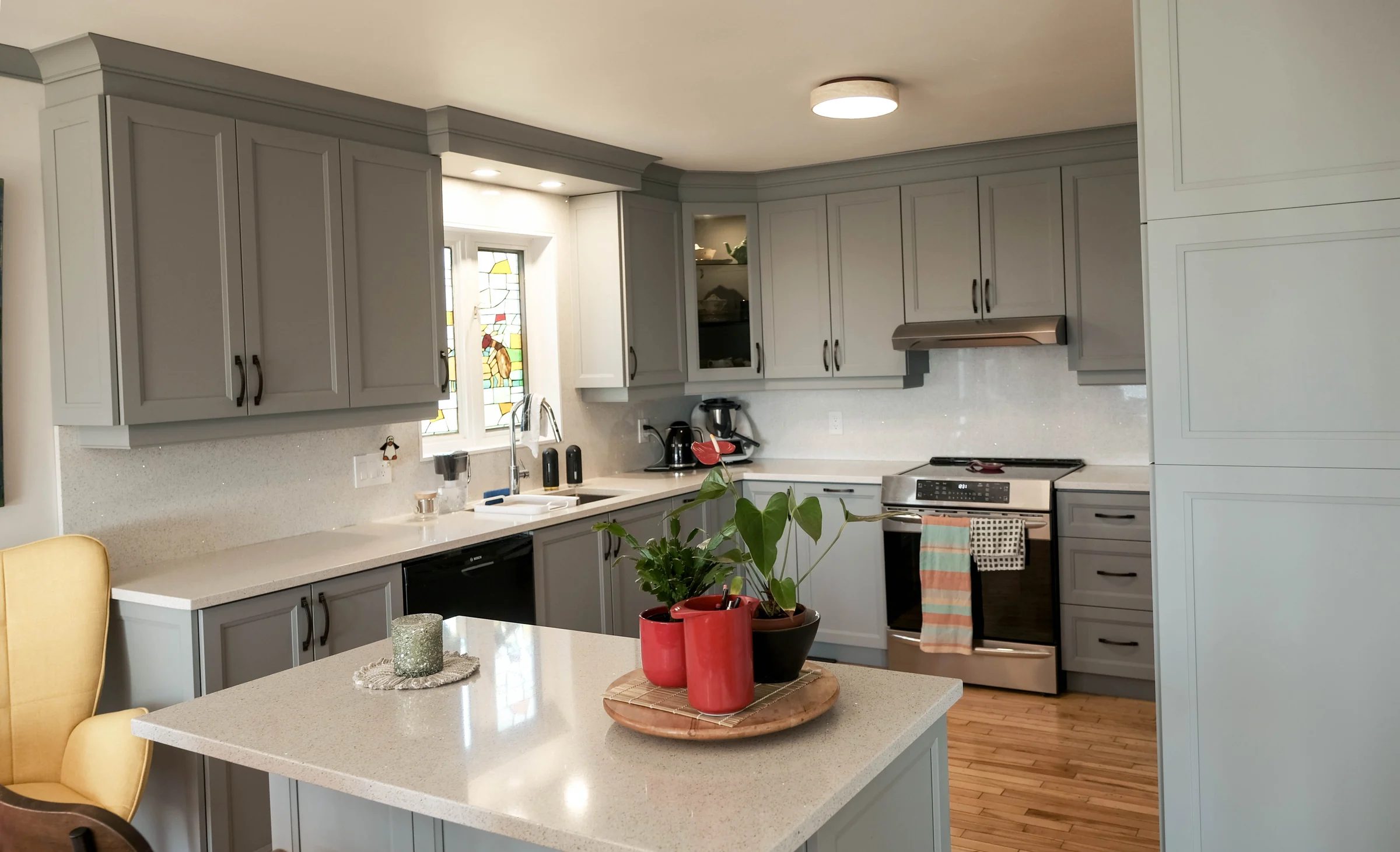
A custom kitchen cabinet answers all three. Each cabinet is built to the room's measurements, with no catalogue module leaving a gap or wasting a corner. The layout, finishes and hardware are chosen for seasonal use, not for a suburban kitchen.
What does an unheated winter do to a kitchen?
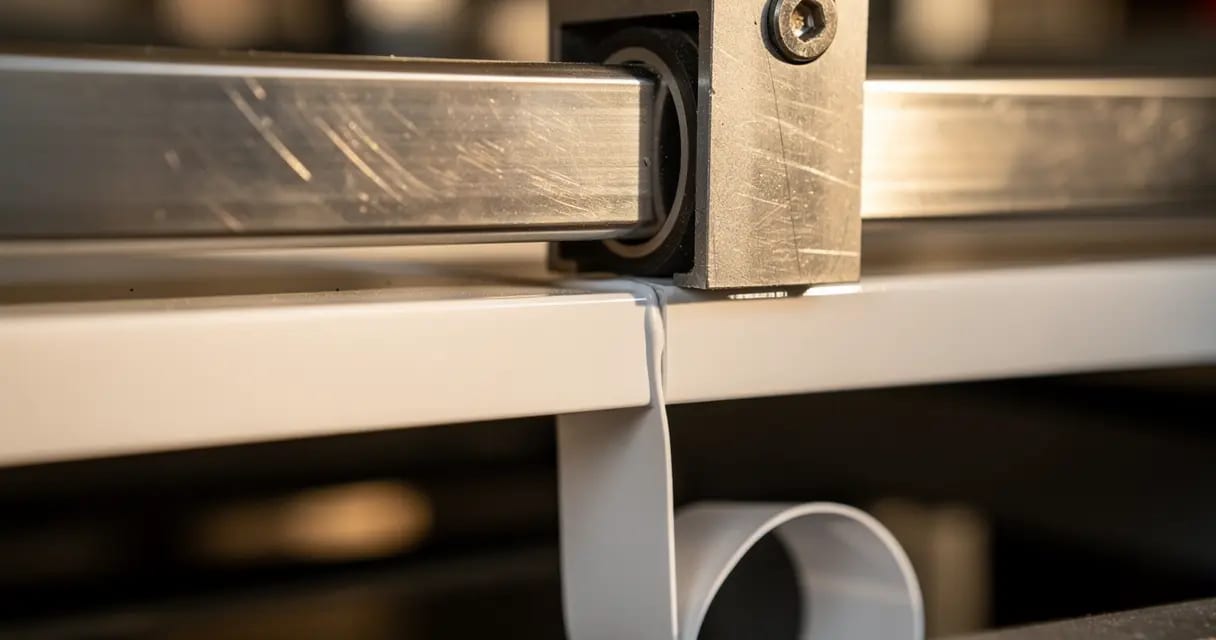
Cold alone is less of a problem than the humidity that comes with it. When the cottage warms up in spring, water vapour condenses on cold surfaces. A panel with a poorly sealed edge soaks that water up and swells. Freeze-thaw cycles, condensation and leaks damage a kitchen far more than temperature does.
- Panels have a core of chips or fibres. Their weak point is the edge: as long as it is sealed, water stays out.
- Panels with a core made to tolerate humidity better exist. Ask on the first call which one suits your cottage.
- A leak under the sink is a plumbing matter, not a cabinetry one: have the connections checked before you close up in the fall.
- Leave doors and drawers slightly open while the cottage is closed, so air can circulate.
Draining the water lines for winter is a plumber's job, and the workshop does not do it. Our post on the lifespan of melamine cabinets explains how these cabinets age depending on care.
Why does melamine suit a cottage?
Textured melamine gives a uniform, tough, easy-to-clean surface in a wide range of colours and textures. Those are the qualities a cottage asks for: a cloth is enough, the surface needs no oil or varnish, and light tones brighten a room that often gets little daylight. The panels come from suppliers such as Uniboard, Olon (including its Cashmere collection), Sublime Collection and AGT.
Melamine kitchens the workshop built more than 30 years ago are still standing. The key remains the edge: well-glued edge banding with no gaps. A cottage exposed to humidity is worth raising on the very first call. The materials guide also covers thermoplastic, polymer and polyester, other possible finishes for the doors.
Which hardware stands up to humidity and salt air?
Hardware is the part that corrodes first. Near the sea, salt air attacks hinges, drawer slides and pulls with a thin finish. Pick hardware with a finish protected against corrosion, and avoid unprotected steel.
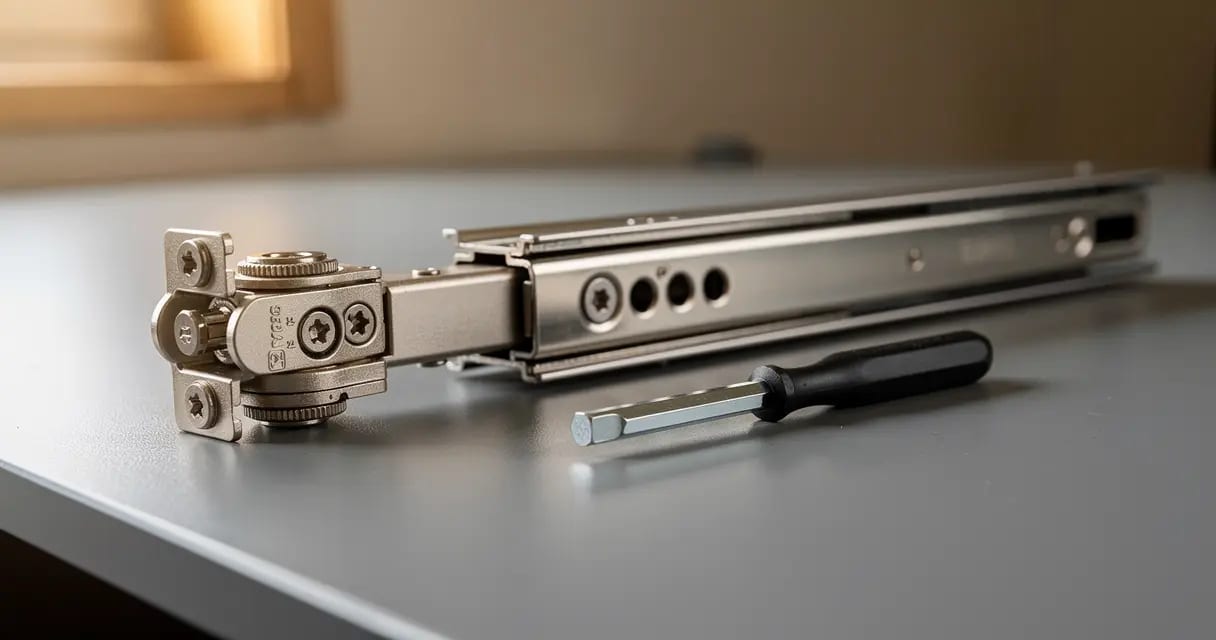
Soft-close hinges and full-extension drawer slides also serve a cottage well: you see everything inside, and nothing slams when everyone cooks at once. Our guide to kitchen cabinet hardware details the types of hinges and slides.
How do you plan a small cottage kitchen?
In a small room, every inch works. Common standards are the starting point, and custom work adjusts them to the room. Catalogue cabinets step up in width by 3 in (7.6 cm); a custom build has no such limit.
A few moves simplify a small kitchen. Keep the sink, refrigerator and range a short distance apart. Run the upper cabinets to the ceiling for the dishes of big gatherings. Plan deep drawers rather than doors in the base cabinets, and a tall cabinet for the bulk food the cottage keeps from one season to the next. A 2D or 3D plan can be prepared on request.
| Item | Common guide | What custom work adjusts |
|---|---|---|
| Counter height | 36 in (91 cm) | Height set to the people who cook |
| Base cabinet depth | 24 in (61 cm) | A shallower depth if the room is narrow |
| Upper cabinet depth | 12 in (30 cm) | Height up to the ceiling, often under a sloped roof |
| Gap between counter and uppers | 18 in (46 cm) | Clearance fitted to small appliances |
| Aisle between two runs | about 3 ft 6 in (107 cm) | A corridor that two people can still use |
Common standards, not requirements. A custom build adapts them to the room.
Who builds and installs a cottage kitchen on the Gaspé coast?
Félix Gagné's workshop is in Saint-Siméon-de-Bonaventure. It offers its full service in the Baie-des-Chaleurs: on-site measuring, design, delivery, installation. As of November 2026, for the rest of the Gaspé, a project is discussed on request, case by case, depending on the distance.
A cottage kitchen is made to order. Describe the cottage, the months you use it, the state of the walls and the plumbing. The workshop then confirms feasibility and timing on the first call, based on its schedule. Connecting water and electricity stays with a plumber and an electrician.
Melamine refers to a family of resins used to make laminates and furniture coatings, as described on Wikipedia (Melamine resin).
A kitchen for your cottage?
Tell us about the cottage, the room and how you use it. In business since 1994, the workshop tells you plainly what can be done. Phone: 418-534-4167.
Frequently asked questions
Is a melamine kitchen right for a cottage that is unheated in winter?
Yes, if the edges are well sealed and air can circulate while the cottage is closed. Moisture entering through an edge or a leak damages a panel faster than cold does. Ask on the first call which panel and edge treatment suit your cottage.
Which hardware should you pick for a kitchen near the sea?
Hardware with a finish protected against corrosion, because salt air attacks thin hinges and slides. Soft-close hinges and full-extension slides are a good fit for the use. The details are in our hardware guide.
Can you build a small cottage kitchen to measure?
Yes. Every cabinet is built to the room's dimensions, with no catalogue module. A small room gains the most from this: every inch becomes storage. The workshop can prepare a 2D or 3D plan on request.
Do you deliver and install a cottage kitchen outside the Baie-des-Chaleurs?
In the Baie-des-Chaleurs, the service is complete: measuring, design, delivery, installation. For the rest of the Gaspé, a project is discussed on request, case by case. Ask on the first call, and tell us where the cottage is.
Do you do the plumbing and electrical work for a kitchen?
No. The workshop builds the cabinets. Connecting water, electricity and appliances is for a plumber and an electrician. The openings in the cabinets are planned at the drawing stage, from their plans.