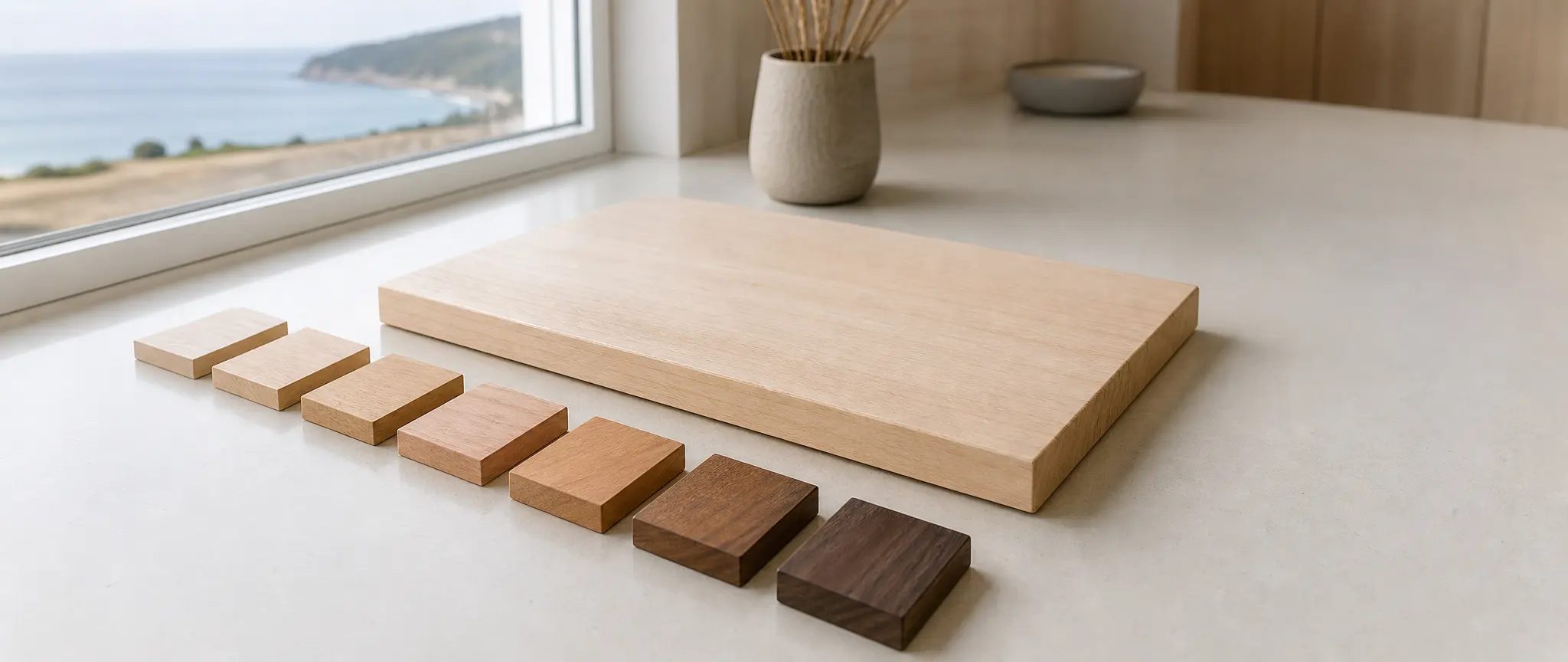
Which wood should you choose for a cutting board?
Pick a closed-grain hardwood: hard maple first, then cherry, walnut or beech. Skip softwoods and red oak. This guide explains why, then how to choose between edge grain and end grain.
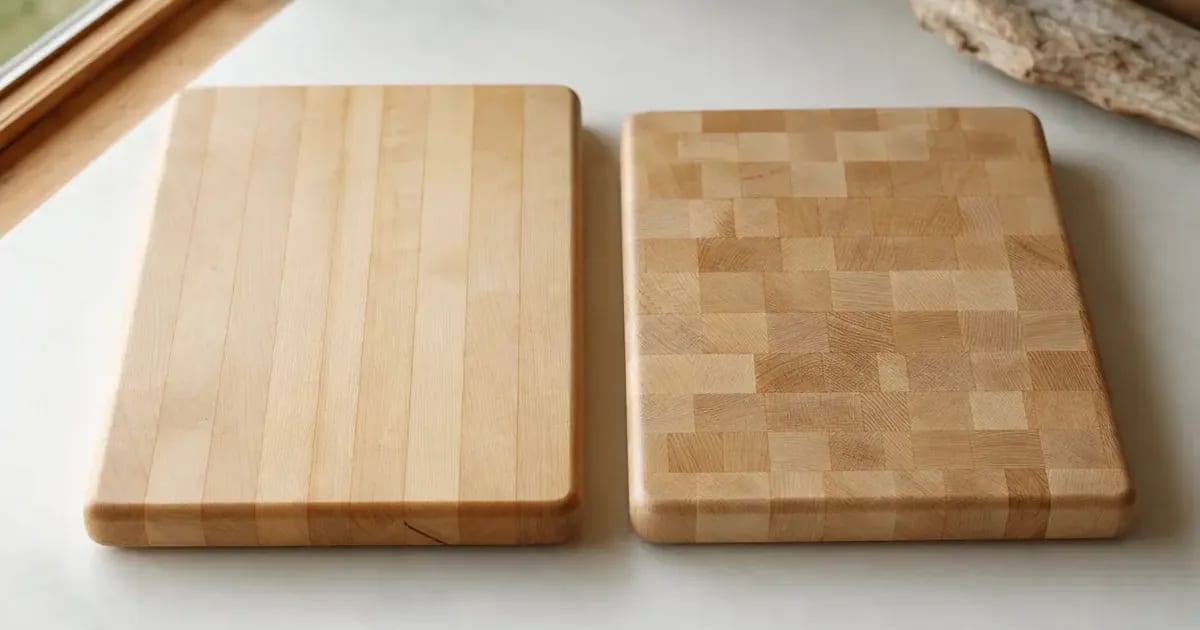
The wood to look for in a cutting board is a closed-grain hardwood: hard maple, cherry, walnut and beech are the usual picks. Their pores are fine, and their surface is hard enough to last without being so hard that it punishes a knife edge. They also wash clean easily.
Softwoods such as pine, spruce or fir gouge quickly. Red oak has open pores that let moisture in. As for construction, an edge grain board suits most kitchens. End grain is gentler on knives, but thicker and heavier.
Which woods suit a cutting board?
Closed-grain hardwoods have fine pores, so moisture and food residue have little room to settle. The Janka hardness rating is a useful guide. It measures the force needed to press a steel ball half its diameter into the wood: the higher the number, the harder the wood. These values are approximate and rounded, as of November 2026, and they vary a little from one source to another:
- Hard maple (sugar maple): about 1,450 lbf. Closed grain, pale colour, the most common choice.
- Beech: about 1,300 lbf. Closed, even grain, pale colour.
- Black walnut: about 1,010 lbf. Softer than maple, dark brown, a little gentler under the knife.
- Cherry: about 950 lbf. Closed grain, a pinkish tone that darkens over time.
The unit, pounds-force (lbf), is the one used in the Janka rating. The site's materials guide shows the materials the workshop works with.
Why avoid softwoods and open-pored oak?
A soft wood gets gouged by the knife. Deep cuts hold water and residue, and the board wears out fast. For comparison, eastern white pine sits around 380 lbf, against about 1,450 for hard maple.
- Pine, spruce, fir: soft woods that mark at the first knife stroke.
- Red oak (about 1,290 lbf): fairly hard, but its pores are open. Air can pass through a piece of red oak end to end, and so can moisture.
- Ash: also open grain, with the same reservations.
White oak, whose pores are largely plugged, is an exception. Maple is still the simpler choice: its surface is fine, pale and even.
One last point: hardness is not everything. A very hard wood dulls an edge faster, and a very soft one gets gouged. The four species above sit in a middle zone: hard enough to last, without wearing a blade down more than necessary.
Edge grain or end grain: which construction?
A board is made of strips or blocks glued together. The way the wood fibres are oriented changes how the board behaves.
- Edge grain: strips glued side by side and set on their edges. The fibres run along the surface. This is the most common construction, thinner and lighter.
- End grain: blocks cut across the fibres, then glued so the fibre ends face up. The blade slips between the fibres instead of cutting across them, which often spares the knife edge.
For most kitchens, edge grain is enough. Choose end grain if you chop a lot and the weight of the board does not bother you. In both cases the wood must be properly dried before assembly and the glue must be suitable for food contact: a board that comes apart or moves is worthless, whatever the wood.
| Criterion | Edge grain | End grain |
|---|---|---|
| Fibres | Lying along the surface | Standing up, ends facing the knife |
| Effect on the knife | The edge cuts across the fibres | The edge slides between the fibres, which partly close again |
| Knife marks | Show over time, sand out as needed | Less visible |
| Oil | Regular care | Soaks up more oil |
| Thickness and weight | Thinner, lighter | Thicker, heavier |
| Construction | Strips glued side by side | Blocks glued, then turned: more assembly |
General guidelines. The choice of construction is discussed with the workshop for each piece.
What thickness and size should you pick?
A thin board moves and warps more easily. A thick board stays stable. These are common guidelines, not standards:
- Edge grain: 3/4 to 1 1/2 in (2 to 4 cm) thick.
- End grain: 1 1/2 to 2 in (4 to 5 cm) thick.
- Working size: about 12 x 16 in (30 x 40 cm), large enough that food does not fall off the edge.
- Serving board: a smaller size is enough, scaled to the table.
Think about where the board will be stored, too. A thick board weighs more than you expect, and an oversized one is awkward to store and to wash in an ordinary sink. Measure your counter and your storage before you choose. For a serving board, see our post on the wooden charcuterie and cheese board.
How do you look after the board once you have chosen it?
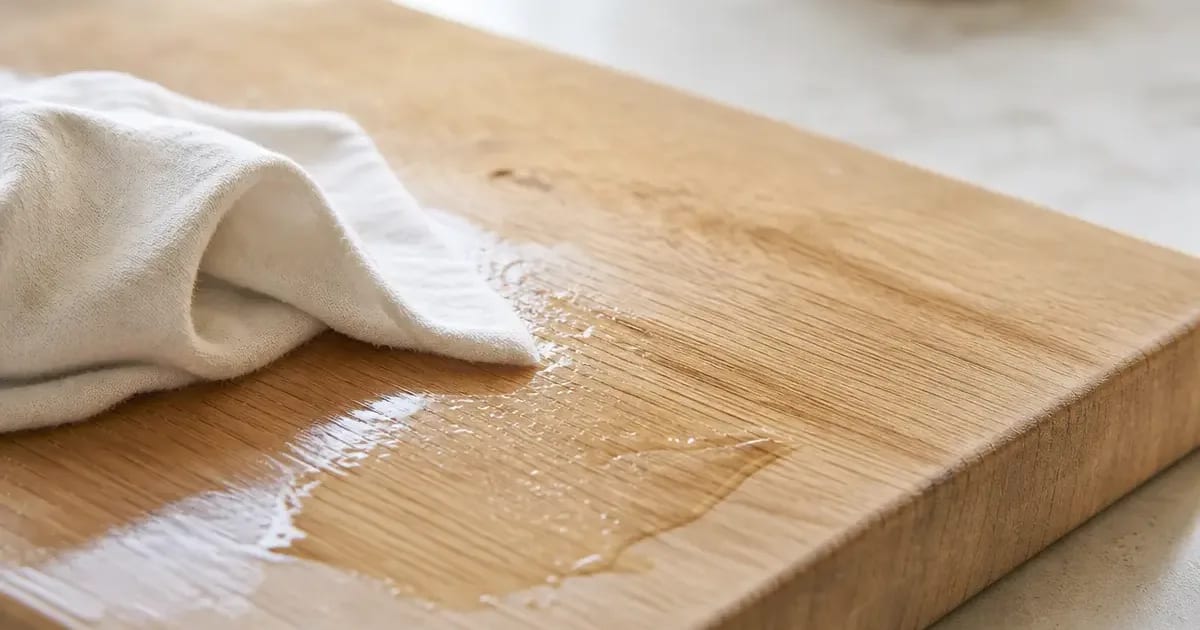
The right wood is not enough: a board lasts as long as it is cared for. The details are in our guide to cutting board oil and care. In short:
- Oil with food-grade mineral oil, about once a month.
- Wash by hand, never in the dishwasher.
- Dry the board on its edge, so air reaches both faces.
How do you order a custom board from the workshop?
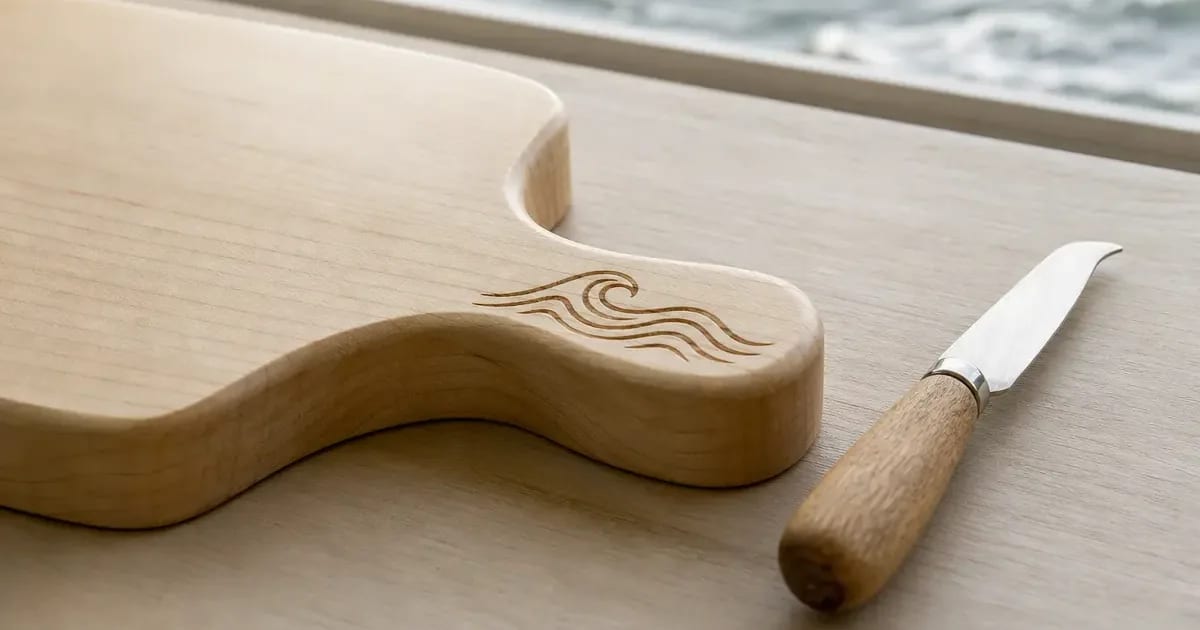
The workshop in Saint-Siméon-de-Bonaventure can make a cutting board to order, in hardwood. You choose the species, the size, the thickness and the engraved text with us.
- Describe the board: how it will be used, its size, the species you want.
- On the first call the workshop confirms whether the piece can be made and by what date it could be ready.
- You receive a quote. Nothing starts before you approve it.
- Pick the piece up at the workshop or have it delivered within the Baie-des-Chaleurs. Elsewhere in the Gaspé, delivery is discussed on request, case by case.
See our custom projects for the other pieces the workshop can make.
Janka hardness values are approximate and vary by source. For the measuring method and other species, see the "Janka hardness test" article on Wikipedia.
A custom cutting board to make?
Tell us how you will use it, the size and the wood you have in mind. The workshop tells you plainly what can be made, and when. Phone: 418-534-4167.
Frequently asked questions
Which wood is most recommended for a cutting board?
Hard maple, first. Its grain is closed, its surface is pale and even, and it is hard enough to last. Beech, cherry and walnut are also common choices.
Can you use oak for a cutting board?
Red oak is not recommended: its pores are open and let in moisture and residue. White oak has pores that are largely plugged, but maple remains the simpler choice.
Is end grain gentler on knives?
Generally, yes: the edge slides between the fibres, which partly close again. In return, the board is thicker, heavier and takes more assembly. Edge grain is enough for most kitchens.
Is walnut a good wood for a cutting board?
Yes. Its grain is closed and it sits around 1,010 lbf. It is softer than maple, so a little gentler on the knife, but it marks more easily.
How thick should a cutting board be?
Plan on 3/4 to 1 1/2 in (2 to 4 cm) for an edge grain board, and 1 1/2 to 2 in (4 to 5 cm) for end grain. A thinner board is more likely to warp.