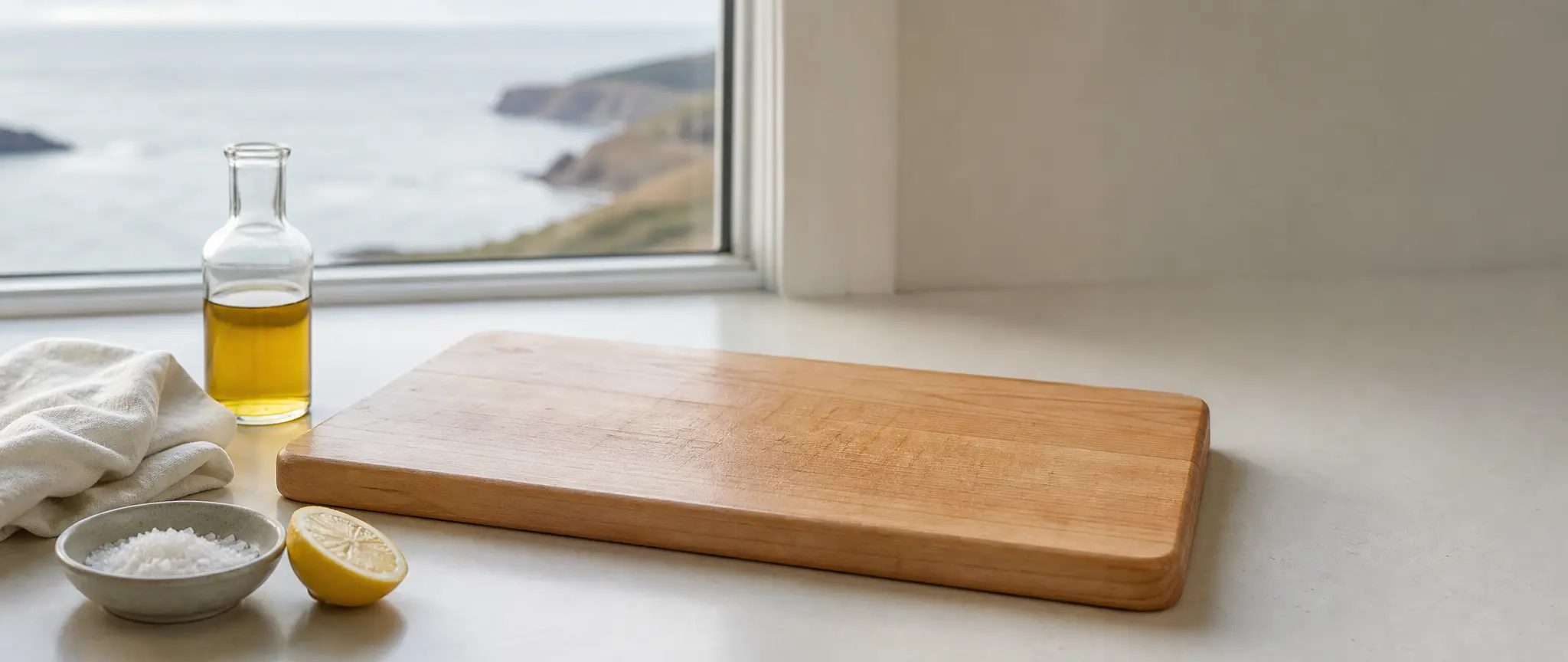
Cutting board oil and care: how to look after a wooden board
A wooden board lasts for years if you oil it, wash it by hand and let it dry on its edge. Here are the steps in order, for a new board, a board you were given, or one that already shows knife marks.
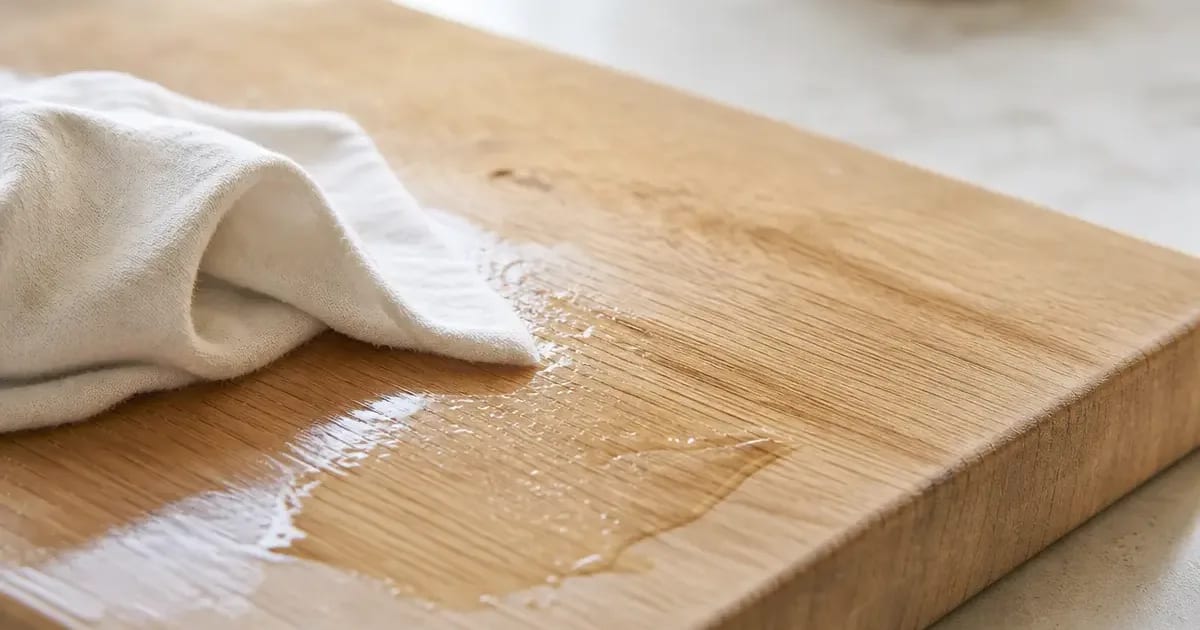
To care for a wooden cutting board, rub food-grade mineral oil into a clean, dry board about once a month, and again whenever the wood looks pale or dry. Wash it by hand, never in the dishwasher, and let it dry standing on its edge.
This guide is mostly for anyone who was given a board and is not sure where to start. It covers the choice of oil, how often to apply it, washing, sanding out knife marks and removing odours. The advice is the usual guidance for hardwood. If the maker of your board gave you care instructions, follow those first.
Which oil should you use on a wooden cutting board?
Food-grade mineral oil is the usual choice. It is clear, odourless and does not go rancid. You can find it at hardware stores, kitchenware shops and pharmacies, often sold as cutting board oil. Here is what works and what does not:
- Food-grade mineral oil: it soaks into the wood and protects it from water. This is the product for the first coats.
- Board butter: a blend of mineral oil and beeswax. The wax leaves a light film that sheds water. Apply it after the oil.
- Avoid: cooking oils such as olive, sunflower or canola. They can go rancid and leave a smell.
- Avoid: varnish, lacquer and furniture finishing oils, which are not made for contact with food.
Read the label. As of November 2026, the wording to look for is food-grade or a clear equivalent. If the label says nothing about food use, pick another product.
How often should you oil a wooden cutting board?
The rhythm depends on use and on how dry your house is. These are common guidelines for hardwood:
- New board, or one you were given: several coats close together during the first week, until the wood stops soaking up the oil.
- Board used every day: about once a month.
- Serving board, rarely used: when the wood turns pale, often a few times a year.
A simple test: put a few drops of water on the surface. If they bead, the wood is protected. If they spread, or if the wood looks pale and dry, it is time to oil. Heated houses have dry air in winter, in the Gaspé as elsewhere in Quebec, and that dries wood faster, so oil a little more often in that season.
How do you oil a cutting board, step by step?
Set aside an evening the first time, because the oil needs several hours to soak in.
- Wash the board by hand, then let it dry completely, standing on its edge, for several hours.
- Pour a little oil on one face. Do not flood the board.
- Spread it with a clean cloth or paper towel, along the grain. Do the sides and ends too.
- Let it soak in for several hours, or overnight.
- Wipe off the excess with a dry cloth. The wood should feel smooth, not greasy.
- Flip the board and repeat on the other face. To add wax, rub in a little board butter afterwards and buff with a cloth.
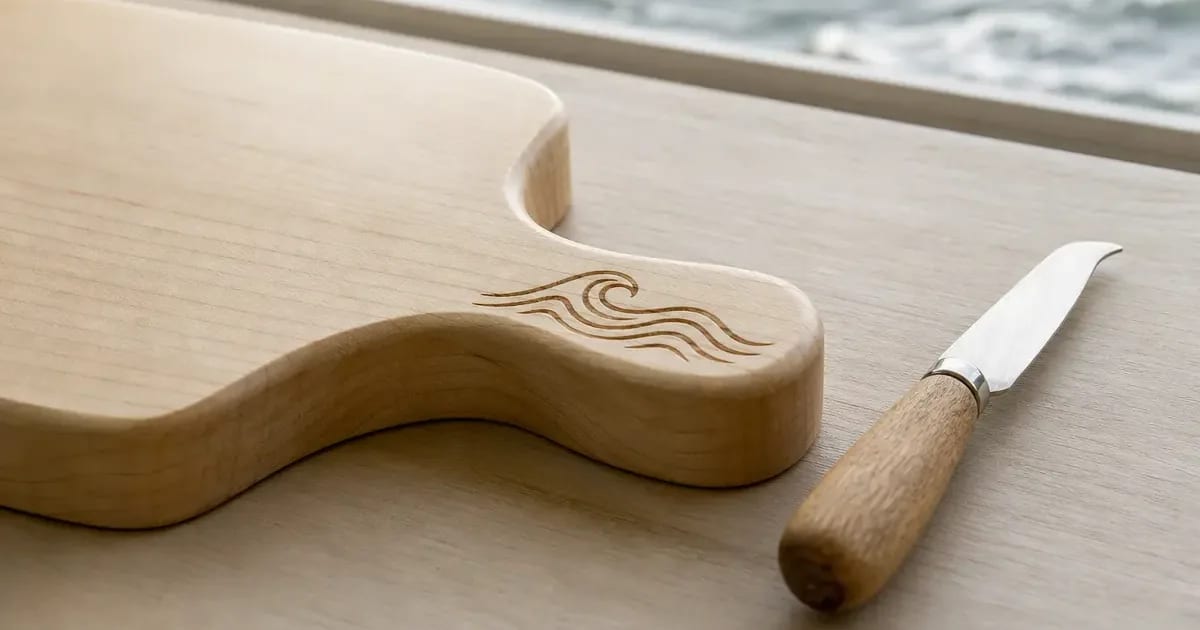
An engraved cutting board is cared for the same way: oil the whole surface, engraving included.
| Step | When | How |
|---|---|---|
| Washing | After each use | By hand, hot water and mild soap |
| Drying | Right after washing | Wipe it, then stand the board on its edge |
| Oiling | About once a month, or when the wood looks pale | Food-grade mineral oil, excess wiped off |
| Board butter | After the oil, if wanted | Thin coat, then buff with a cloth |
| Sanding | When cuts turn rough or deep | 120 then 220 grit paper, along the grain |
| Odours | As needed | Coarse salt and half a lemon, then rinse |
Common guidelines for hardwood. Instructions from the craftsperson who made the board come first.
How do you wash a cutting board without damaging it?
Wash it by hand with hot water and mild soap, using a sponge or brush. Rinse quickly, wipe it, then stand the board on its edge so air reaches both faces.
- Never in the dishwasher: heat and long exposure to water swell the wood, which can split or warp.
- Do not leave it soaking in the sink.
- Do not lay it flat and wet on the counter: one face drying before the other can warp the board.
- After raw meat, wash the board right away.
Store the board away from the stove and hot plates. A serving board for charcuterie and cheese needs the same care. See also our post on the wooden charcuterie and cheese board.
How do you remove knife marks and odours?
Fine cuts are part of a board's life. When they turn rough or deep, light sanding brings back a smooth surface. Sand lightly: every pass takes off a little wood.
- Wash and dry the board.
- Sand along the grain with 120 grit paper, then 220 grit.
- Wipe off the dust with a slightly damp cloth and let it dry.
- Oil the whole board, as in the earlier steps.
For garlic or onion odours, sprinkle coarse salt on the board and scrub with a cut half lemon, then rinse and dry. If the board is split, warped or too scored to sand, replace it: it now holds more residue. The workshop can make a new one to order (see our custom projects). Whether it can be done, and when, is confirmed on the first call.
Were you given a board, or do you want to give one?
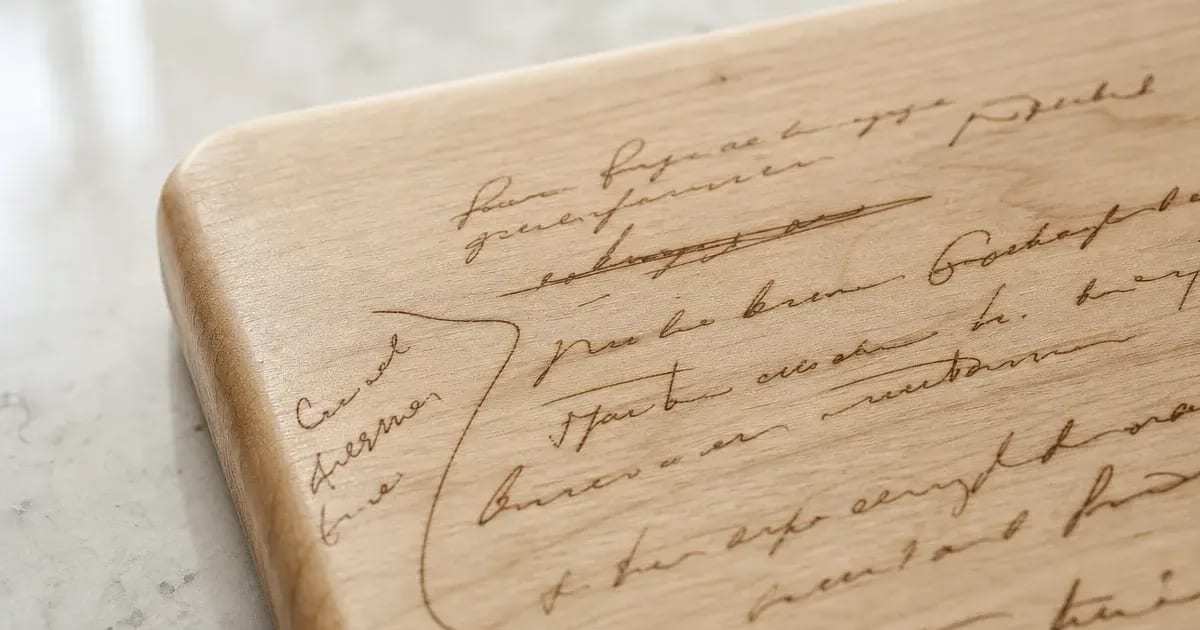
A board is better given with its instructions: food-grade mineral oil, hand washing, drying on edge. An engraved board is ordered with a name, a date or a recipe, and the process is described on our laser engraving page.
To give a board, describe the wood, the size and the text to the workshop in Saint-Siméon-de-Bonaventure. It can make one to order, in hardwood. You can pick it up at the workshop or have it delivered within the Baie-des-Chaleurs. Elsewhere in the Gaspé, delivery is discussed on request, case by case.
For a general overview of cutting boards and their materials, see the "Cutting board" article on Wikipedia.
A board to make or replace?
Tell us the wood, the size and the text to engrave. In business since 1994, the workshop tells you plainly what can be made, and when. Phone: 418-534-4167.
Frequently asked questions
Which oil should I use on a cutting board?
Food-grade mineral oil. It is odourless and does not go rancid. Board butter, which adds beeswax, goes on afterwards in a thin coat. Check that the label states food use.
Can I oil a cutting board with olive oil?
It is better to avoid it. Vegetable cooking oils can go rancid over time and leave an unpleasant smell. Food-grade mineral oil remains the usual choice for a wooden board.
How long should the oil soak in?
Several hours, or overnight for a new or very dry board. The next day, wipe off the excess with a dry cloth. The wood should feel smooth, not greasy.
Can a wooden cutting board go in the dishwasher?
No. Heat and long exposure to moisture swell the wood, which can split or warp. Wash the board by hand, wipe it, then stand it on its edge.
How do I get garlic or onion smell out of a board?
Sprinkle coarse salt and scrub with a cut half lemon. Rinse, then dry the board on its edge. Oil it afterwards if the wood looks dry.