Caring for an epoxy countertop or table: the right habits
An epoxy countertop is simple to clean, but three habits matter: wipe with a soft cloth, keep heat off the surface, protect it from cuts. Here are the right habits, and the questions to ask the workshop before you order.
To care for an epoxy countertop or table, wipe the surface with a soft cloth and lukewarm water, put a trivet under anything that comes off the stove or out of the oven, and always cut on a board. Avoid abrasives and solvents, and ask the workshop which product suits the resin of your piece.
Epoxy is a durable surface, but it is not stone. This post complements our text on the price of an epoxy countertop: one covers cost, this one covers the care that follows the purchase. To see what the workshop builds, see our epoxy countertops.
Day to day: how do you clean an epoxy surface?
Everyday cleaning stays simple. A smooth surface is treated gently: hard rubbing marks it. Day to day:
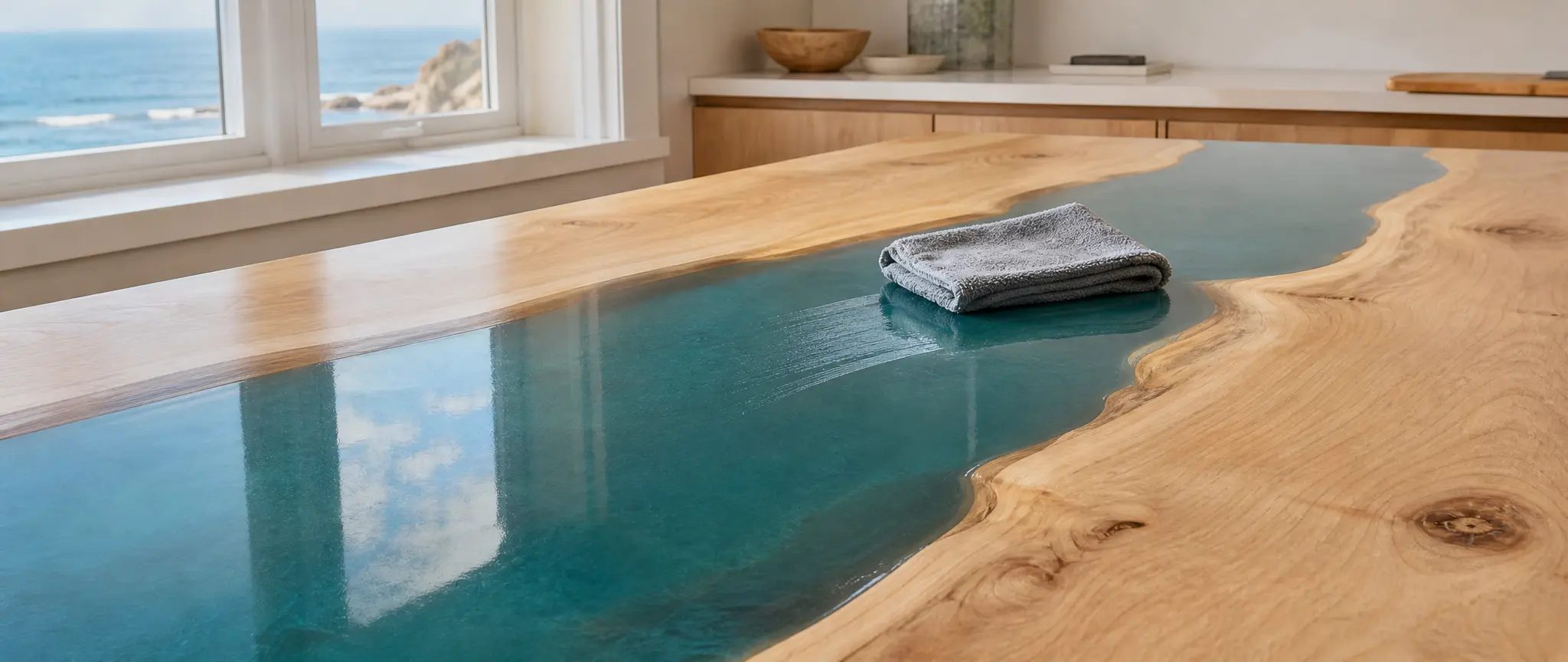
- wipe with a soft or microfibre cloth dampened with lukewarm water;
- add a drop of mild soap if needed, then rinse with a clean cloth;
- dry with a dry cloth to avoid water marks;
- wipe up coloured spills (wine, coffee, sauce) quickly: one pass of the cloth right away saves rubbing later.
These are general guidelines. The exact cleaning product depends on the resin and finish of your piece: confirm it with the workshop.
Heat: can you put a hot pan on epoxy?
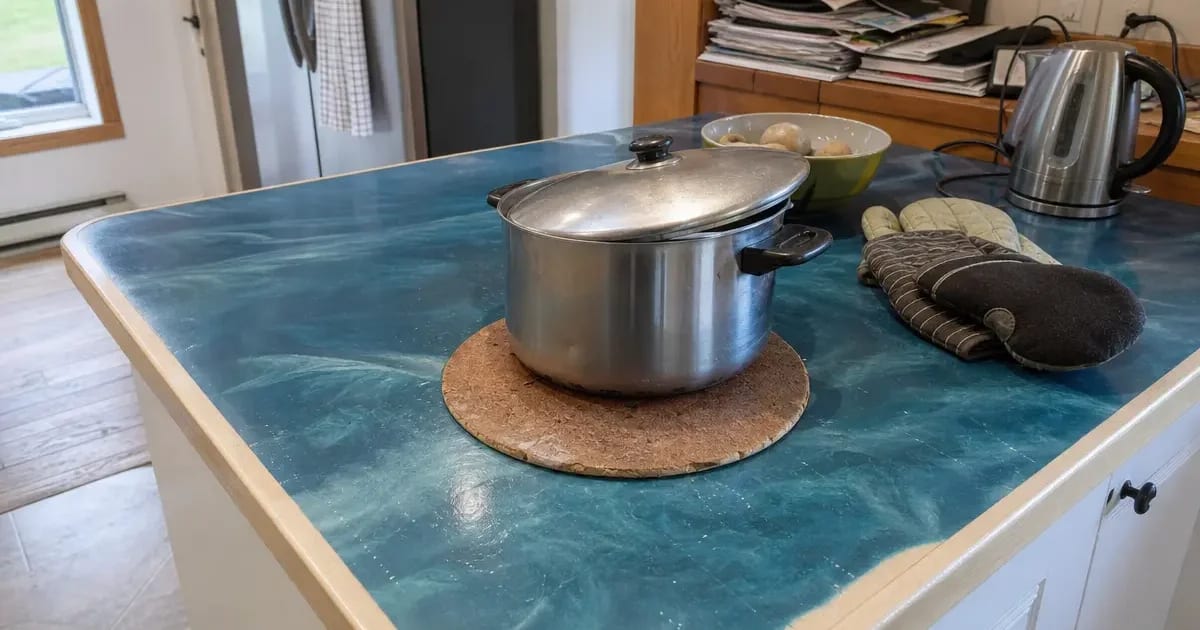
Not directly. Epoxy tolerates moderate heat, but a thermal shock can leave whitish marks that are hard to remove. Use a trivet, even if the surface seems to hold up. Depending on what you set down:
- pots, pans and dishes out of the oven: a thick trivet, every time;
- hot cups and teapots: a coaster is usually enough;
- small appliances that heat for a long time (slow cooker, coffee maker): an insulating pad under the appliance;
- on a table: a placemat under hot plates and a holder under candles, because flame and hot wax count as heat too.
Resins do not all tolerate the same heat. As a worked example, one manufacturer states, as of November 2026, that its cured resin withstands up to 120 °F (50 °C) and advises against setting a dish fresh from the oven directly on it (see the note at the bottom of the page). Ask the workshop for the heat tolerance of your piece's resin, and keep the trivet as the rule.
Scratches: how do you protect the surface from cuts?
A smooth surface shows whatever touches it. A slipping knife leaves a mark, and so does dragged pottery. The habits that prevent the most marks:
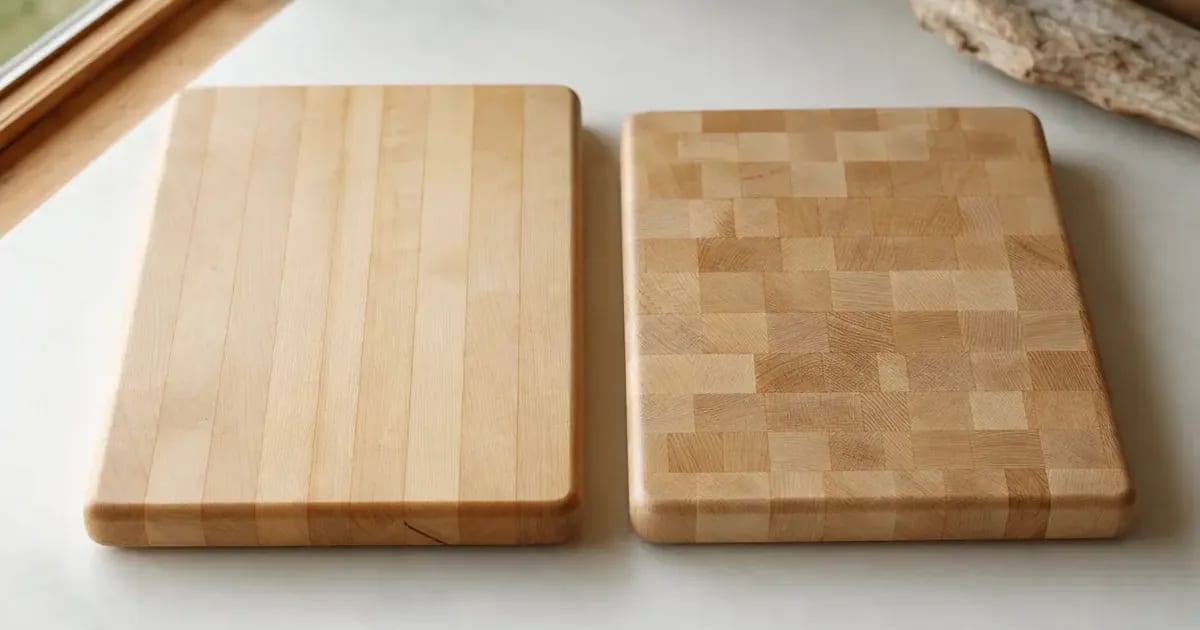
- a cutting board under the knife, never directly on the surface (see our post on the wood for a cutting board);
- felt pads or a mat under stoneware, heavy pots and cast-iron bowls;
- lifting heavy or rough-bottomed objects instead of dragging them;
- protectors under the feet of small appliances.
A fine scratch shows mostly against the light. For a deeper mark, do not rub with an abrasive: ask the workshop what is possible for your piece.
Sun and water: the other points to watch
Two other points are handled with a little attention:
- direct sun: a piece in front of a large window is exposed for longer. Tell the workshop when choosing the resin, because UV resistance is one of the selection criteria;
- standing water: wipe up puddles, especially around the sink and along the edge of a table.
Which products should you avoid on epoxy?
When in doubt, less is better. Unless the workshop says otherwise, avoid:
- scouring powders, steel wool and abrasive sponges, which scratch the finish;
- solvents (acetone, thinner), which can dull the finish;
- harsh chemical cleaners, which can scratch or dull the finish;
- steam cleaners, because of the heat;
- hand sanitizer, which can dull the finish.
These are the guidelines usually given for resin surfaces, not a guarantee specific to your piece. The workshop can tell you which products suit the finish you chose.
| Situation | Do | Avoid |
|---|---|---|
| Daily cleaning | Soft cloth, lukewarm water, mild soap if needed | Abrasive sponge, scouring powder |
| Hot pan or dish | A thick trivet | Setting it directly on the surface |
| Cutting | A cutting board | Cutting directly on the epoxy |
| Direct sun | Mention it to the workshop before choosing the resin | Exposing the piece without having thought about it |
| Unknown product | Ask the workshop | Trying it on the whole surface |
General guidelines, to confirm with the workshop for the resin of your piece.
What should you ask the workshop before ordering?
The right habits depend on the resin and the finish. At the quote stage, ask these questions and write down the answers:
- the heat tolerance of the resin used;
- UV resistance, if the piece gets sun;
- the recommended cleaning product, and the ones to avoid;
- the time to full cure before normal use;
- what is possible if the surface is scratched or marked.
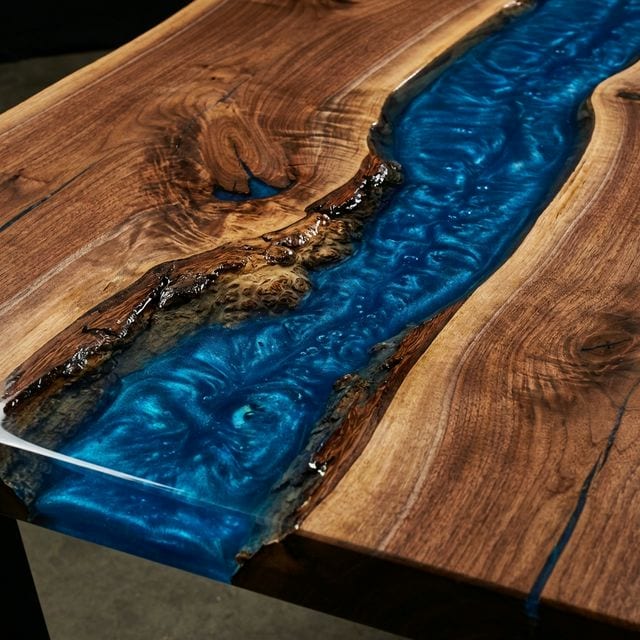
For a table, the page on epoxy river tables shows what the workshop builds.
For a worked example on heat, resin maker ArtResin states, as of November 2026, that its cured resin withstands up to 120 °F (50 °C) and advises against setting a very hot item, such as a dish fresh from the oven, directly on it (page "What is ArtResin's Heat Resistance?"). That figure applies to that product, not to the resin of your piece.
A question about caring for your piece?
Atelier Multidécor builds custom epoxy countertops and tables in Saint-Siméon-de-Bonaventure. Describe your project and ask your questions about the resin and the finish. Founded in 1994, the workshop tells you plainly what is possible. Phone: 418-534-4167.
Frequently asked questions
Can you put a hot pan on an epoxy countertop?
Not directly. Epoxy tolerates moderate heat, but a thermal shock can leave whitish marks that are hard to remove. Use a trivet under pots and dishes that come off the stove or out of the oven.
What should you clean an epoxy countertop or table with?
As a general rule, a soft cloth and lukewarm water, a little mild soap if needed, then a dry cloth. Avoid abrasives and solvents. Confirm the product with the workshop for the resin of your piece.
Can you cut directly on an epoxy countertop?
No. A knife marks a smooth surface. Always cut on a cutting board.
Does sunlight damage epoxy?
Direct sun is a point to watch, especially for a piece in front of a large window. Tell the workshop when choosing the resin: UV resistance is one of the selection criteria.
Does epoxy need a lot of maintenance?
No: everyday care comes down to wiping the surface. What needs attention is heat, cutting and abrasive products.