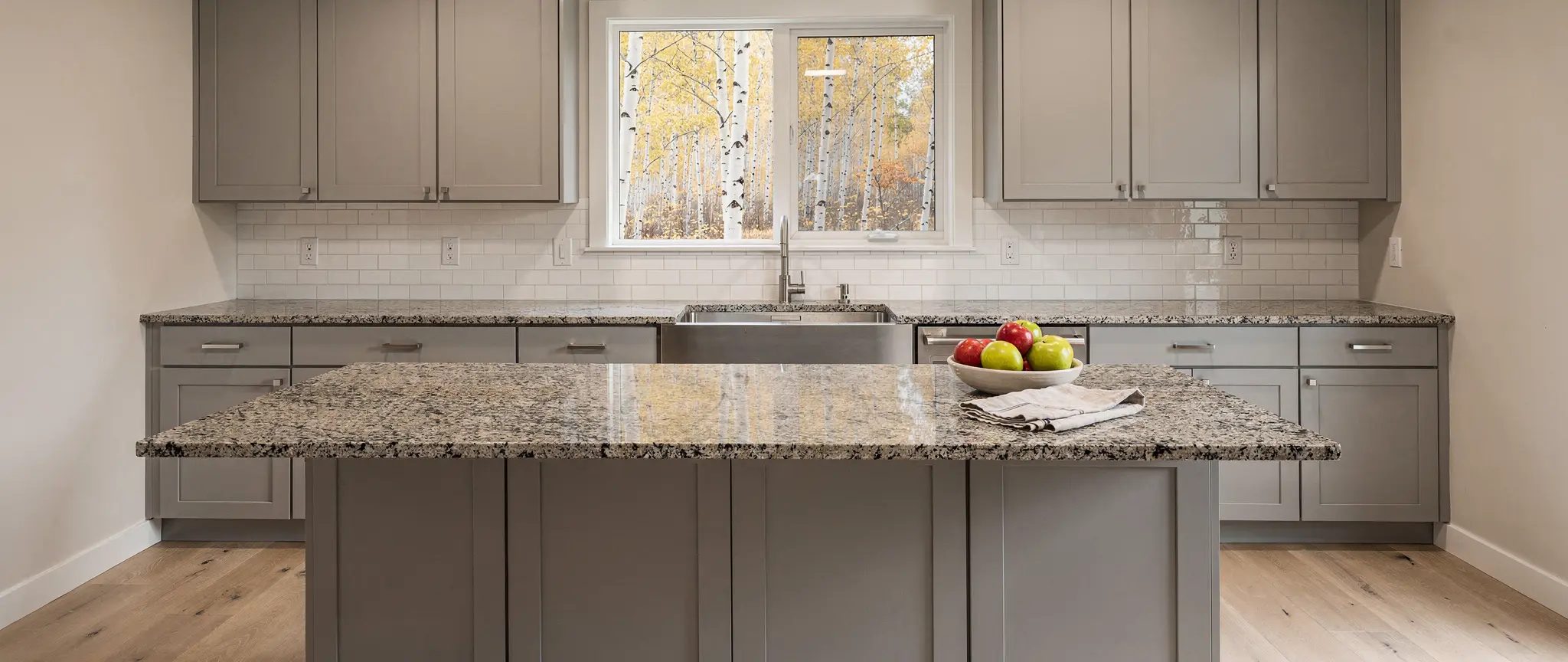
Granite countertops: choosing, sealing and caring for them
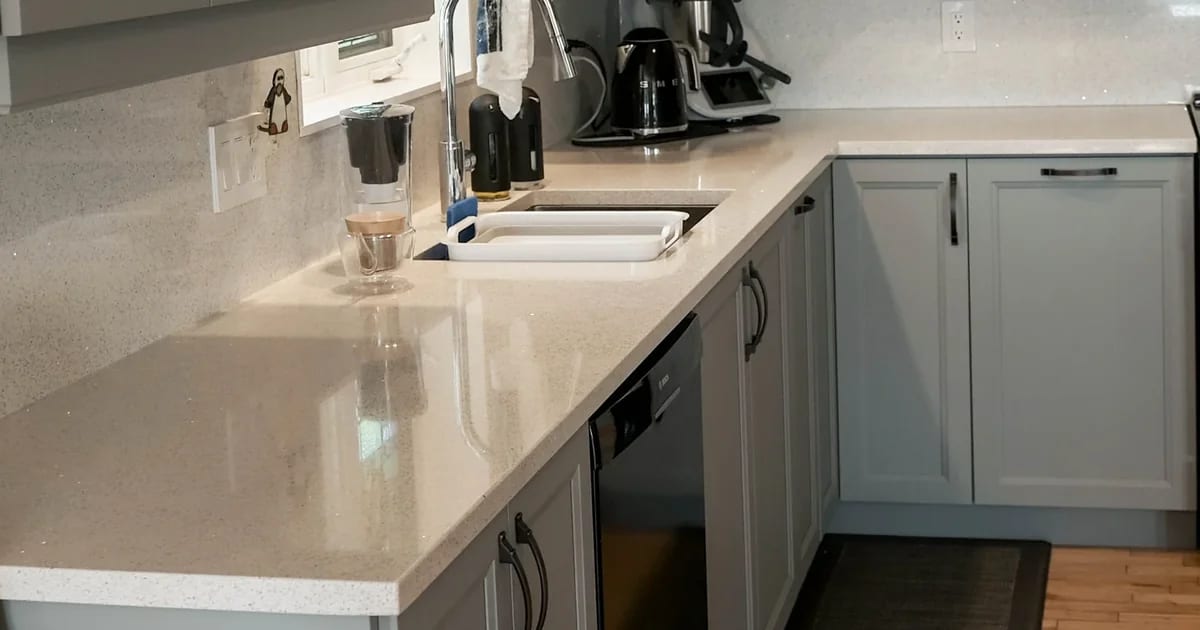
A granite countertop is made of natural stone: every slab is different, and its care depends on its density. Sources disagree on sealing, and the price depends on several factors. In Baie-des-Chaleurs, Atelier Multidécor can arrange the countertop with the cabinets it builds; partner companies measure, cut and install the stone.
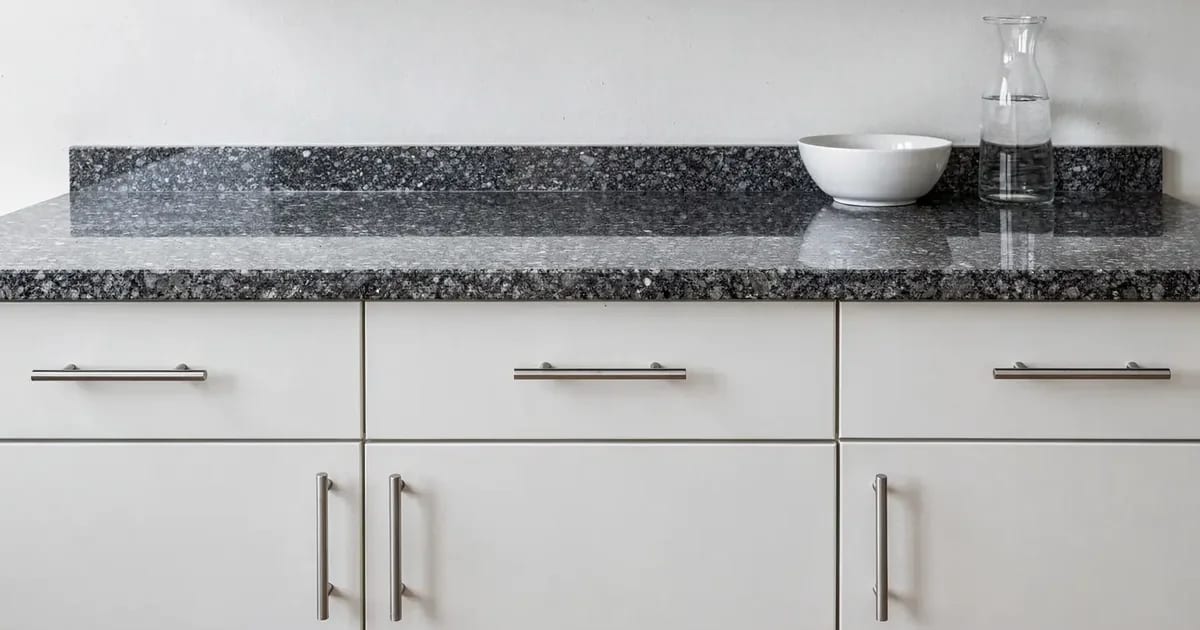
A granite countertop lasts a long time when it sits on a solid base and gets the right care. Published advice contradicts itself on one central point, though: should you seal it, and how often?
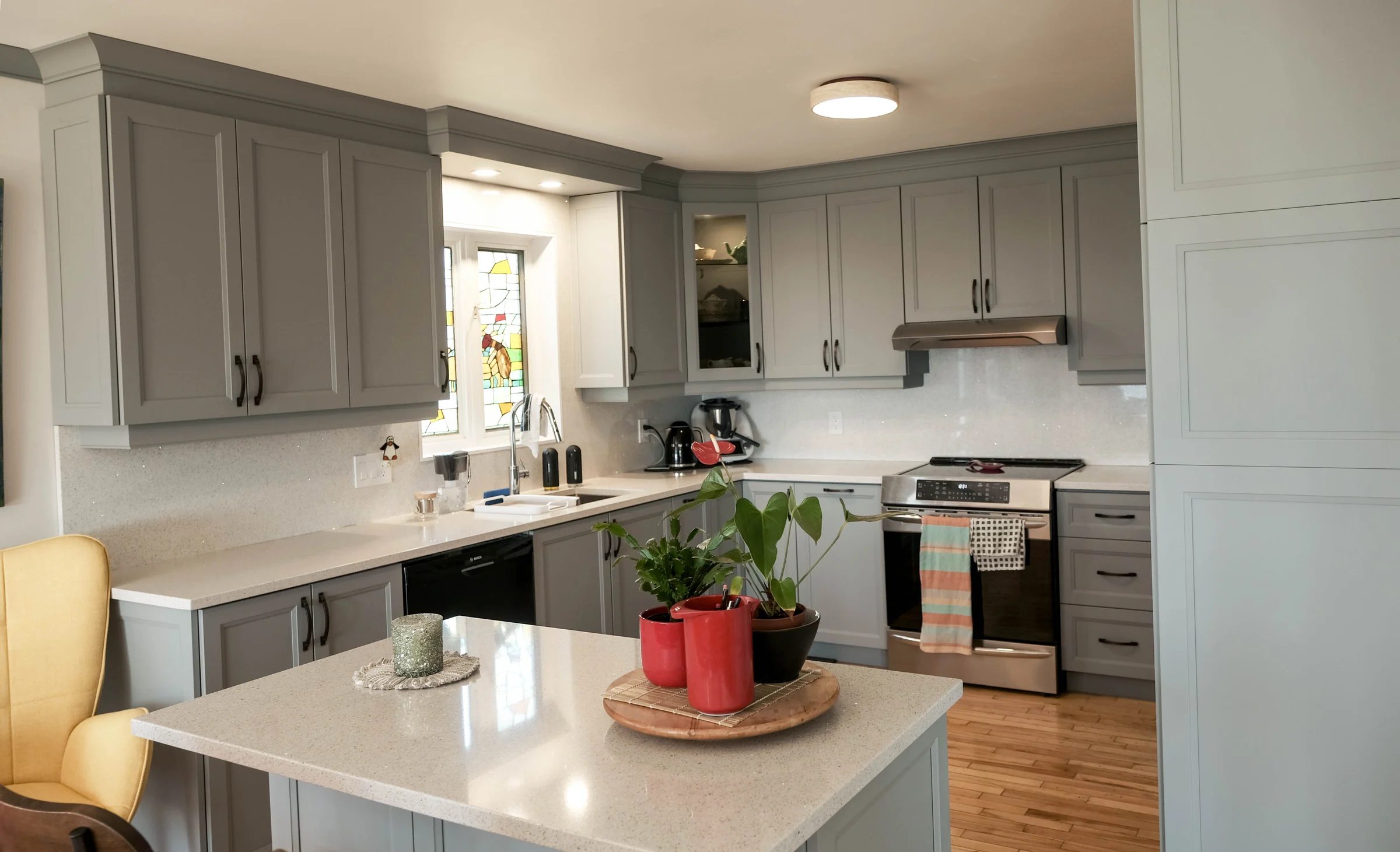
The atelier designs and builds the cabinets the countertop sits on. Our page on custom kitchen cabinets describes how those cabinets are designed. With your cabinets, the atelier can also arrange a granite or quartz countertop. Partner companies take the measurements, cut the stone and install it. For the stone itself, this guide lists the questions to ask the company that will cut and install it.
What is the difference between a granite and a quartz countertop?
Granite is a natural igneous rock that crystallized from magma. Strictly, the rock holds 20 to 60% quartz and more than 35% alkali feldspar, with dark minerals under 10%. In the stone trade the word is broader. It also covers gneiss, anorthosite, gabbro and other hard crystalline rocks. That is a trade convention: the geological name goes on the spec sheet, the commercial name on the sample. For everyday use these stones behave comparably, but their density varies, and it matters for care.
- Every slab is different, even within one lot. Colour and pattern vary.
- Look at the whole slab before you approve it, because the pattern shifts from one end to the other.
- Bring a cabinet door or a paint sample to judge the whole scheme.
- A small sample is a poor guide to the finished result. Consumer Reports advises taking large samples home, even if you have to pay for them.
- Ask how two pieces will match at the seam, and which part of the slab will be used for the island.
- Ask for the exact name of the stone and its spec sheet, which lists its water absorption rate.
Quartz is an engineered stone. Its pattern stays constant from slab to slab, though some patterns look unnaturally uniform, Consumer Reports notes. It needs no sealer. Quartzite is a natural stone, even though some sellers file it under granite. Our quartz countertop guide covers its colours and its drawbacks.
| Point | Granite | Quartz |
|---|---|---|
| Origin | Natural stone, every slab differs | Engineered stone, constant pattern |
| Sealer | Useful for many granites, depending on density | No sealer required |
| Heat | A trivet is still the careful choice | Its makers ask for a trivet |
| Chips | Edges and corners can chip | Same risk at edges and corners |
| Scratches | Sources contradict each other | Sources contradict each other |
| Consumer Reports testing | Top scores: spills, heat, knives | Same top scores |
| Price | Published ranges overlap | Published ranges overlap |
Sources: Consumer Reports, Natural Stone Institute and Quebec fabricator guides.
Do granite countertops need a sealer?
The sources disagree, and it is better to know that before you buy. The Natural Stone Institute is the natural stone industry's trade association. It holds that most granite countertops do not need sealing. Many still benefit, and a good penetrating sealer lasts 10 to 15 years according to that position, adopted in 2006. In Quebec, several fabricators advise a yearly coat instead. Others say the countertop is sealed at the plant, treated again after installation, then as use requires.
- A sealer is an impregnator that repels liquids. Sealed stone can still stain.
- Density decides. According to a Quebec fabricator, dark, dense granites rarely stain, while many pale granites are more porous.
- In a kitchen, the sealer should be non-toxic, since it sits on a food-preparation surface.
- The water-drop test: put a little water on a clean, dry area of the countertop.
- If the water beads up, the surface still repels liquids. If it darkens or spreads, it needs a new treatment.
- Guides do not agree on the wait: 5 to 15 minutes in some, up to 30 minutes in others.
- Test several spots, especially near the sink and the range.
- If oil stains worry you, repeat the test with a drop of mineral oil.
American care guides advise testing the slab to know when to treat it again. Those guides mention 1 to 5 years between treatments, and admit that opinions differ. Ask the company that installs your countertop whether it applies a sealer at installation, which product, and what follow-up care it advises.
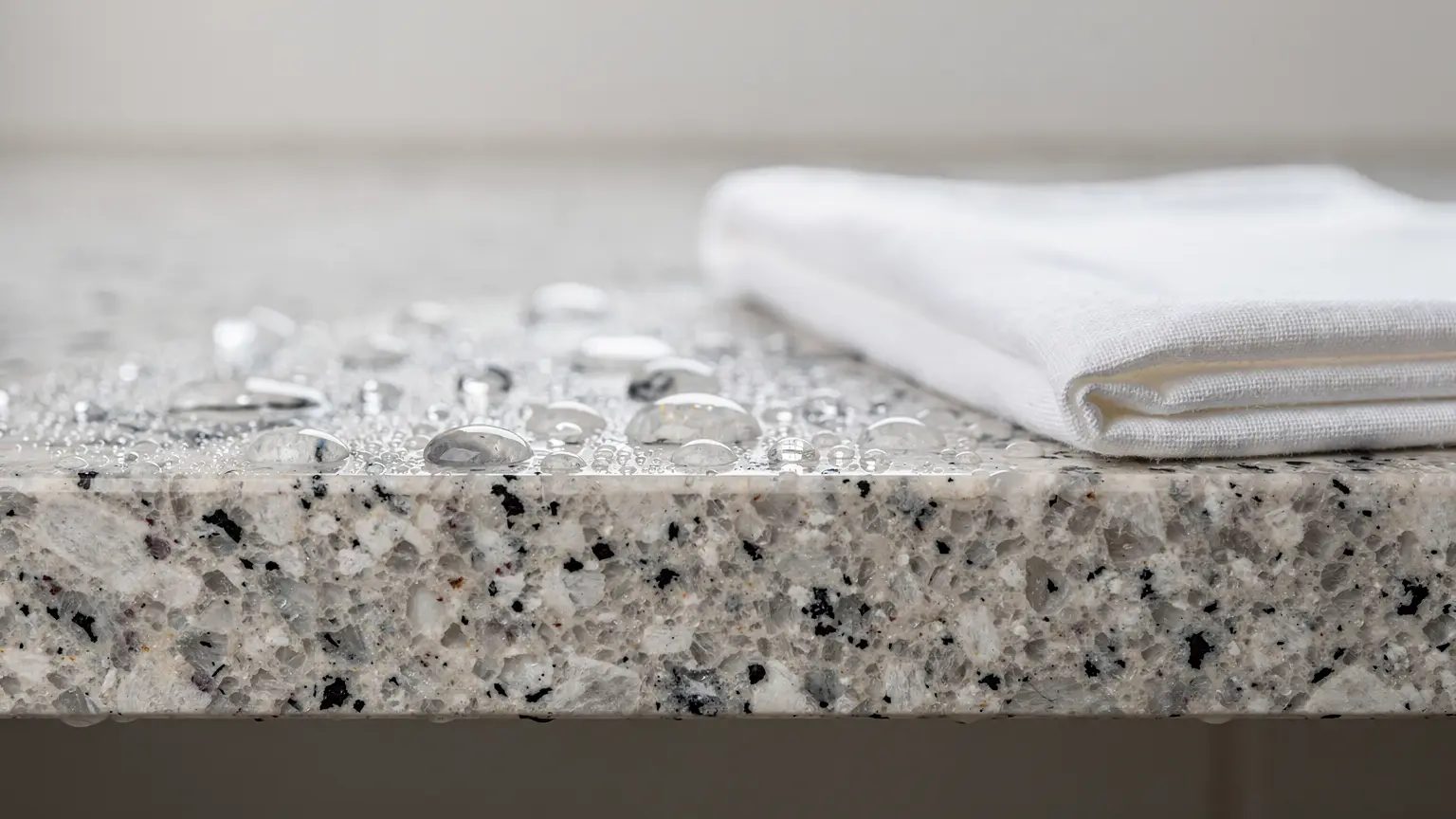
How do you clean a granite countertop, and what should you avoid?
For daily care, the Natural Stone Institute recommends a neutral cleaner, a stone soap or a mild dish soap in warm water. Rinse, then dry with a soft cloth. Too much soap leaves a film on the surface.
- Avoid vinegar, lemon juice and acidic cleaners. Repeated acid wears down the sealer.
- Avoid ammonia, bleach and window cleaners, which care guides advise against for the same reason.
- Avoid abrasive powders, creams and other scouring products, which can scratch some stones.
- Avoid rust removers and toilet bowl cleaners. Several contain traces of hydrofluoric acid, which attacks every stone, granite included.
To disinfect, a Quebec care guide suggests equal parts water and isopropyl alcohol. Let it sit for 3 to 5 minutes, rinse, then dry with a microfiber cloth.
Wipe up spills quickly. Granite that is unsealed or poorly sealed can absorb oil, which darkens the stone. For a set-in stain, guides suggest a poultice: a paste of baking soda or poultice powder, covered, left in place, then rinsed.
What damages a granite countertop: heat, knives, chips?
In Consumer Reports testing, granite earned top scores against spills, hot pots and knives. Quartz earned the same scores. Quartz makers still ask for a trivet.
- A trivet is still the careful choice on granite. Repeated heat in one spot can wear down the sealer.
- A sudden temperature swing carries a small risk of thermal shock in a stone with natural fissures.
- Cutting on granite dulls knives. Keep a cutting board.
- A heavy object striking the edge can chip the stone. Repair takes a professional and usually carries a fee.
- According to fabricators, a slab runs about 8 to 11 ft (2.5 to 3.3 m) long. A kitchen therefore often has one or two seams, filled with tinted epoxy.
- Seams usually go where they show least, for example near the sink or the fridge.
- Granite is cut in 3/4 in (2 cm) or 1 1/4 in (3 cm) thickness. According to a Quebec fabricator, 1 1/4 in (3 cm) is the most common thickness in the province's kitchens.
- At 1 1/4 in (3 cm), expect about 16 to 19 lb per square foot (80 to 95 kg per square metre).
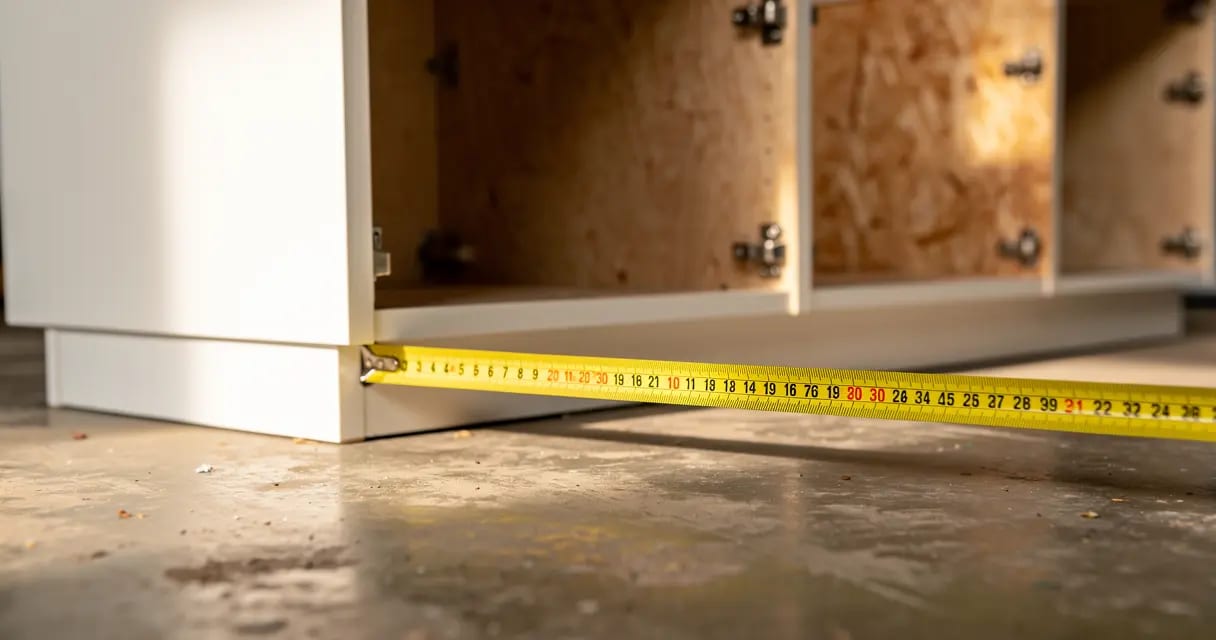
That weight makes the base decisive. According to a Quebec fabricator, a crack after installation usually comes from cabinets that move or are not level. The cabinets must be solid and levelled before the stone arrives.
For an island with stools, overhang matters too. The Natural Stone Institute design manual limits unsupported overhang. It sets 6 in (15 cm) for 3/4 in stone and 10 in (25 cm) for 1 1/4 in stone. A seating overhang is often 12 to 15 in (30 to 38 cm), which calls for brackets or hidden steel supports. Our article on the custom kitchen island covers its design.
Black granite, white granite, Quebec granite: what changes
According to a Quebec fabricator, dark granites stain very little, while stains are more common on pale granites. Colour therefore also matters for care: a white granite calls for more attention to the sealer and the water-drop test.
- Many granites get a resin treatment at the plant that fills microfractures. Treated or not, they will outlast most of us, according to the Natural Stone Institute.
- A Quebec seller notes that some black granites are dyed, and that an acid can leave pale spots on them. Ask whether the stone is dyed.
- Some grey granites are known for a very even colour.
Quebec also quarries its own granite. Stanstead Grey comes from Stanstead, in the Eastern Townships, and Cambrian Black from Saint-Nazaire, south of Lac Saint-Jean. According to their producer's lab data, the first absorbs 0.3% of its weight in water and the second 0.09%. The ASTM C615 standard sets the maximum absorption for granite at 0.40% (2003 edition).
If origin matters to you, ask for the exact name of the stone, its quarry or country of origin, and its spec sheet.
Granite countertop cost: what makes the price vary
The price of a granite countertop depends on the stone, the fabrication and the installation. Published ranges vary widely: one Quebec seller shows four different ones on its own pages. It is better to understand what moves the number.
- The stone: its rarity, its colour and its origin.
- The format: tile granite costs far less than a full slab, but has many more seams.
- The fabrication: the edge profile, the sink and cooktop cutouts, the number of seams, an L or U shape.
- Thickness and weight: a 1 1/4 in (3 cm) slab takes two or three people and lifting equipment to install.
- The sealer: the product chosen and the protection period it claims.
- Removing and disposing of the old countertop, often billed on top.
Consumer Reports advises getting several items spelled out in the estimate and the contract. They are thickness, finish, edge, cutout fees, backsplash and removal of the old countertop.
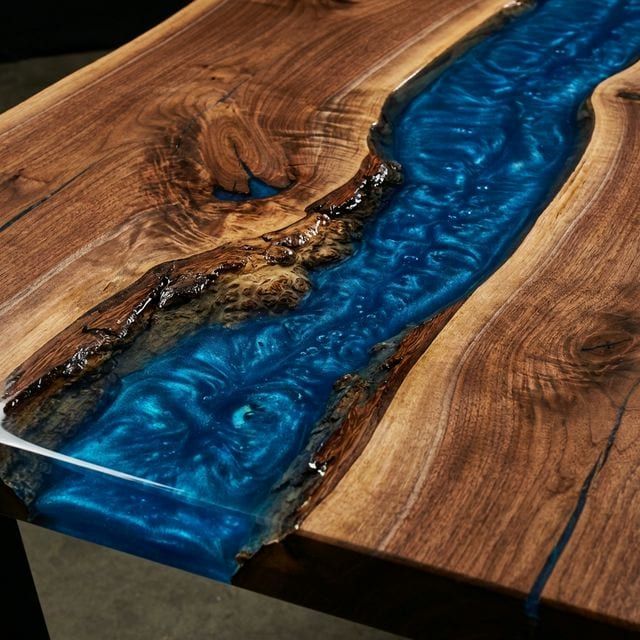
If you are comparing several materials, our article on epoxy countertop pricing sets out another option.
On sealing granite, see the position of the Natural Stone Institute, adopted in 2006.
Planning your kitchen and its countertop?
The atelier designs and builds the custom cabinets that carry the countertop. It can also arrange a granite or quartz countertop with your cabinets. Partner companies take the measurements, cut the stone and install it. Let's talk about your project.
Frequently asked questions
What should you not use on granite?
Avoid vinegar, lemon juice and acidic cleaners, ammonia, bleach and window cleaners. Scouring powders and creams can scratch some stones. Several rust removers and toilet bowl cleaners contain traces of hydrofluoric acid, which attacks granite too. A mild soap in warm water is enough for daily care.
Is white vinegar good for granite?
No, not for regular cleaning. Repeated acid wears down the sealer and dulls the polish. On a dyed granite, an acid can also leave pale spots, according to a Quebec seller.
How do you clean granite with baking soda?
Care guides use it mostly as a poultice, for a set-in stain. Mix a paste of baking soda, spread it on the stain, cover it and let it work, then rinse. For daily cleaning, a mild soap in warm water is enough.
How do you clean black granite?
As with other granites: mild soap in warm water, a rinse, then a soft cloth to dry. Too much soap leaves a film, and vinegar or other acids wear down the sealer. A Quebec seller notes that some black granites are dyed, and that an acid can leave pale spots on them. Ask whether the stone is dyed.
What are the disadvantages of a granite countertop?
Every slab is different, so it is worth seeing the whole slab before you approve it. Depending on its density, granite may need a sealer, and a Quebec fabricator notes that many pale granites stain more easily. Edges and corners can chip, and the stone is heavy, so the cabinets must be solid and level.